Monday, May 22, 2006

My Family, And Other Toppings, Gollaglees, Lambs, Elliotts, Agnews, Moffitts, Mitchells Et Cetera ...

This blogger started to get interested in genealogy and building up a family tree recently, dear blog reader - it's probably because Keith Telly Topping has reached 'that age' where one becomes aware of ones own mortality and all that.

It's good fun and a very useful diversion from me doing any 'real' work for a few days (actually, the original idea was to do an article to pitch to the local paper but it seems to have extended a bit beyond that now). Firstly, I sat my mother down and got about ninety minutes of family history and her memories on who was married to whom and what were various peoples maiden names on tape. Then I started checking out census records and, births marriages and deaths websites, and spent a couple of days in the local library and, finally, joined GenesReunited.

From all of six days research, I can already tell you that my dad's family is a straight combination of Cumbrian agricultural labourers - especially one Thomas Topping (born 1833) who came to Newcastle from Crosby-upon-Eden near Carlisle looking for work in the mid-1840s - and a bunch of second and third generation Irish migrants who, for some bizarre reason, changed their name from Gallagher to the allegedly 'much less Irish-sounding' Gollaglee and lived in West Hartlepool.

It's funny, actually - until three days ago I knew virtually nothing about my paternal grandmother, Bridget (who died when I was about seven and whom I can barely remember) except for three things which were bolted into my brain from an early age:
  • a) Her maiden name was Golligly (that exact spelling).
  • b) She was probably born in Ireland or, at least, if she wasn't then her father definitely was.
  • c) Her mother was either wholly or partly Spanish.
The last bit might still prove to be accurate (more research needed there - I know she was called Sarah Gordon and that her parents, similarly, were Irish) but the first two, it turns out, certainly are not.

Meanwhile, on side of my mum's family - the Lambs - are comfortably from Suffolk and Norfolk (specifically, Snape and Great Yarmouth) where the cow-shit lies thick (the name alone, I would suggest, means that we're all descended from shepherds). And, in the story of Edward Lamb, my great grandfather, you have an almost textbook microcosm of British Society in the early years of the industrial revolution. Born the son of countless generations of farm labourers, decides that he needs to move to where the work is and ends up a decade later with his young family living in 93 Maria Street in Elswick working in William Armstrong's munitions factory on Scotswood Road. When I say that he was a visionary, I don't mean that he would have seen the changing world in the way that George Stephenson or Isembard Kingdom Brunel would have but, in his own small way, he was aware of the way the wind was blowing and, because of that, I'm here. The other lot of my mothers ancestors - the Elliotts, the Moffitts, the Johnstons, the McMillans and the Agnews - are all very Scottish after a couple of generations of Northumbria (except for the Gaylors, who are yet more Irish).

Anyway, here's the Telly Topping United 1964-65 promotion squad. See if you can spot this blogger (hint, I'm just about the only one not looking at the camera!)

Friday, April 28, 2006

More "Tales From The Book Club"

As Keith Telly Topping mentioned previously, he will be using this blog once every couple of months to update the list of those books that have featured on The Book Club (and, those which we haven't been able to squeeze in, but which are still highly recommended).
Show Five:- 3 April
Raymond Khoury - The Last Templar (Orion)
Will Hodgkinson - Guitar Man: A Six-String Odyssey (Bloomsbury)
J Shaun Lyon - Doctor Who: Back to the Vortex (Telos Publishing)
Douglas Greenwood - Who's Buried Where in England? (Constable & Robinson)
Ken Emerson - Always Magic in the Air (Fourth Estate)
Simon Hughes - Morning Everyone (MacMillan)
Andrew Smith - Moondust* (Bloomsbury)

[* not Moonshot as both Keith Telly Topping and Jon Harle insisted on calling it on the show itself - many, many apologies to Andrew and to his publisher for getting the name of the book wrong ... But it's a wonderfully well-written book whatever it's called!]
Also received during March and April:
Robert Dimery - 1001 Albums You Must Hear Before You Die (Cassell Illustrated)
Ray Banks - Saturday's Child (Polygon Publishing)
Gary Rimmer - Number Freaking: The Surreal Sums Behind Everyday Life (Icon Books)
Ian Mortimer - The Perfect King: The Life of Edward III (Jonathan Cape)
Paul Du Noyer - We All Shine On: The Stories Behind Every John Lennon Song (Carlton)
John Kennedy O'Connor - The Eurovision Song Contest: The Official History (Carlton)
Steve Watkins and Clare Jones - Unforgettable Journeys to Take Before You Die (BBC Books)
Gavin Pretor-Pinney - The Cloudspotter's Guide (Sceptre Books)
Matthew Parker - Monte Cassino (Headline Book Publishing)
Thomas Myler - Boxing's Hall of Shame (Mainstream Publishing)
Fred Eyre - Kicked Into Touch (Mainstream Publishing)
Robert and Isabella Tombs - That Sweetest Enemy: The French & The British From The Sun King To The Present (William Heinemann Publishing)
Karen Armstrong - The Great Transformation (Atlantic Publishing)
Harry Thompson - Penguins Stopped Play (John Murray Books)
Mandy Ambert - Geordie and the Spaceman (Author House)
David Nicholson-Lord - Planet Earth (BBC Books)
Nick Hornby - A Long Way Back (Penguin Books)

Several of these will feature in the next programme which is on 8 May (due to next Monday being a Bank Holiday). This blogger is still in the process of sorting out the script for this month as a couple of books which he wanted to feature haven't turned up yet.

Keith Telly Topping would also like to pay a moment's tribute to one of his all-time literary heroines, Muriel Spark, who died last weekend. Most people will know her best as the author of The Prime Of Miss Jean Brodie - quite possibly the greatest novel written in the English language in the last Century. However, her work was always challenging and remarkably multi-layered, witty and humane. Check out The Ballad Of Peckham Rye, The Girls Of Slender Means, Momento Mori, Reality & Dreams and the remarkable The Abbess Of Crewe for other outstanding examples of Muriel's work. There's a fine website run by the National Library of Scotland here for further details on this quite extraordinary writer and her, equally remarkable, life.

Monday, April 17, 2006

You Can't Say "Crap" On The Radio


Another one from the random cover jpeg generator...

Anyway, Keith Telly Topping is thoroughly delighted to report that BBC Radio Newcastle have - finally - got their shit together and added his monthly show, The Book Club, to their Listen Again feature.

So, for anybody who missed the April 2006 show, if you want to listen to it, just go follow the link BBC Tyne RaW feature.

Thursday, April 13, 2006

Dig It!

This is yet another article - in somewhat extended form - which yer actual Keith Telly Topping wrote for the Intergalactic Enquirer magazine in the US. It was written around the spring of 2003 I believe (note the seemingly contemporary reference to Ten Years Of Time Team). I've also included a couple of 2006 post-scripts.

This blogger deeply loves Time Team and the opportunity to celebrate the wonderful eccentricities of such a quintessentially British show to a completely fresh (US) audience proved too good an opportunity to miss. I'm told that the article itself was a popular one with some very positive feeback from readers.
I was pleased to discover a couple of weeks ago that one of my favourite British shows of the last decade has finally turned up on American TV (albeit, on a very obscure part of it). When asked, recently, what she watched for pleasure, Buffy The Vampire Slayer writer Jane Espenson mentioned ‘an oddball English thing’ on the History International Channel called Time Team. A woman of great taste, clearly (then again, we knew that anyway). However, for ‘oddball’, that really should read ‘eccentric British genius.’

Time Team has done for archaeology what Michael Palin’s various travel series did for their subject; that is, to turn a potentially deadly dull television format into something genuinely watchable. The series began in 1993 and has produced over one hundred and fifty shows in the decade since, all fronted by The Black Adder's Tony Robinson, himself a keen amateur archaeologist.

(2006 note: I have to say that I love the way many of my comedy heroes have managed to turn their hobbies into new careers over the last few years - Palin through his travel shows, Bill Oddie rapidly becoming the BBC's foremost wildlife expert, Eddie Izzard producing madcap social history programmes for the Discovery Channel, Stephen Fry's effortlessly affecting humanity turning an episode of Who Do You Think You Are? into a life-affirming statement on survival. Anyway, back to 2003...)
The 'hook' of the series is that the team - a variety of genuine archaeologists and expects in different historical fields - will be invited to dig a particularly site (often something as simple as somebody’s back garden) and discover all that they can about it, in just three days (the timescale was determined back at the beginning of the show simply by the fact that most of those involved beside Robinson have, you know, 'proper jobs' to do elsewhere so they tended to film the shows over Bank Holiday weekends, et cetera.) That, in and of itself, doesn’t sound especially radical, but it’s the glorious characters that populate the Time Team universe who make it all so enjoyable. These include the dry, seen-it-all Black Country professor Mick Aston, Roman expert Guy de la Bédoyère, droll field surveyor Stewart Ainsworth, John Gater and Chris Gaffney the frequently put-upon Geophys experts, gregarious, Al Murray-lookalike pottery expert Paul Blinkiron, genial historian Robin Bush, the goddess of punk archaeology Doctor Alice Roberts and a trio of drop-dead gorgeous site-archaeologists Carenza Lewis, Jenni Butterworth and Katie Hurst (think Lara Croft-crossed-with Bernice Summerfield and you're getting the general idea).
Best of all, however, there's Phil Harding, a man whose absolutely infectious enthusiasm for his subject and for the task at hand is impossible not to be affected by. Dear old Phil, he shovels his muck and he likes his beer - although, as Tony Robinson is keen to point out, his friend Harding is, also, a quite brilliant, internationally renowned archaeologist - something often overlooked by the show's critics. In this company, Robinson - a lovely, astute, humane and down-to-Earth guy anyway - acts as a kind-of voice for the viewer, regularly asking 'what does that mean?' whenever the discussions start to get too technical or jargon-filled. And, of course, he’s always ready to throw in the odd Baldrick-ism when the situation calls for it.

Relaxing, and very easy on the eye, the series is shot over the summer mostly in the English (or Scottish, or occasionally Welsh) countryside - excavating anything from a Neolithic bone cave in the Cotswolds to a field in France where a Spitfire crashed just sixty years ago. They've done underwater digs on the wrecks of Spanish galleons, visited Hadrian's Wall and Holy Island, dug numerous Roman villas in the West Country (those at Turkden and Dinnington were especially memorable), Iron Age round-houses on Salisbury Plain, Coventry's lost Medieval cathedral and a Viking boat burial in the Outer Hebrides. They've also done a few overseas digs (in Maryland, in Nevis in the West Indies and in Spain). The Roman sites are often the most visually interesting, as the viewer can actually see walls, floors and other structures emerging from the dirt - notably at digs at Cirencester in 1999, Greenwich Park in 2000, Ancaster in 2001 and Bath and Whitestaunton in 2003. On other occasions, it’s just the odd bone fragment or piece of pot that convinces the experts - and, via them, us - that something like fifteen hundred years ago, someone actually lived on this ground beneath their feet. When that occurs - as it does in most episodes - it is, I have to confess, often quite a humbling moment. We are all of us transitory, we're for a very brief time (in relative terms) and, once we're gone, all that we will leave behind is, like the post holes and robbed out walls that the Time Team excavate, mere shadows in the dirt.
The series has achieved a genuine cult popularity in Britain, with Sunday night audiences around the three million mark and celebrity fans who include the Prime Minister, Eddie Izzard and Bill Wyman, all of whom have appeared on the series. Time Team is an example of the same kind of mad British consciousness that can produce something like Top Gear (another show which I've got a lot of time for. Largely, again, because of the enthusiasm with which Clarkson, Hammond and May present it). The two series may seem to be absolute polar opposites in many ways (one being, basically, a bunch of hippies digging in a field[*], the other about a trio of grinning petrolheads cheerfully destroying the environment) but there's no other country in the world than Britain that would produce two shows like these and give them equal prominence and which would both be tremendously popular. And, as an interesting sidebar, have many members of the same audience.

[*]As Tony Robinson himself noted in a revealing interview included on the DVD Time Team In Your Garden (2005) "It's a bunch of old hippies digging in a field, looking for 'Woodstock' under the ground in pottery! How could that possibly be a success? Only in Britain!"

There is no doubt that Time Team has substantially - significantly - raised public awareness and understanding about archaeology. Time Team contributor and Bronze Age expert Francis Pryor has written: "Before the first series in 1993, it was hard work starting an excavation. I can remember arriving at a building site in Fengate, where I was to cut some exploratory trial trenches. When I announced that I was an archaeologist, some wit in a JCB quipped that I had lost my way to Egypt. After Time Team that same chap would be asking when I was planning to bring in the geophysics."
A documentary on Time Team's tenth anniversary (Time Team: The First Ten Years - broadcast in April 2003) nakedly revealed that the archaeological establishment is somewhat split over whether Time Team, which has increased archaeology’s profile tenfold in the UK, is beneficial or not. Like similar debates in the music world and other fields over previous decades, there is a suspicion over something new, populist, down to earth and fun amongst the cognoscenti. Something that lets the great unwashed public into the hallowed world of esoteric and mysterious knowledge. How dare they explain something to "normal people" that had previously been the province of a select few academics. (Aside from some clear professional jealousies such criticisms are, sad to report, often seemingly class-based. Yes, I know it's the Twenty First Century but, apparently, in parts of the archaeological community, we're still stuck knee-deepin the Dark Ages.)

Ultimately, however, I think it's just great some of the establishment are scared of Time Team. Like punk rock and independent movies, Time Team thumbs a metaphorical provocative nose at something dusty and ancient and says ‘fuck you - this is for everyone.’ Long may it, and other maverick examples of such delightful eccentricity, continue and prosper.

Six Great Time Team Moments:

6. In the middle of a - very entertaining - Iron Age and Medieval dig at Waddon, quite unexpectedly Stewart gets them to explore a bump in a field which turns out to be a previously undocumented henge site.

5. Phil, Margaret Cox and Guy discovering the carved "Viridios" inscription inside a Kist sarcophagus at Ancaster.

4. Mick Aston losing his temper and swearing his head off when discovering that they'd all been digging in the wrong place for two days in a site at Templecombe in 1995.

3. Tony's sheer joy at Carenza's uncovering a Roman mosaic floor in a garden in Cirencester ("Yes! First one in fifty programmes!")

2. The remarkable episode at Birdoswald on Hadrian's Wall in 1999 and the discovery of an completely in-tact Roman cremation ern.

1. One of TV's most remarkable fifty minutes, the 'Celtic Spring' episode at Llygadwy (filmed in the summer of 2000 and broadcast in early 2001) which saw the team using their forensic expertise to expose what appeared to be an elaborate archaeological hoax. There were any number of great moments in this - Phil and Francis proving that a Neolithic standing stone is nothing of the sort; Guy, Mick The Dig and Richard Reece sorting through the numerous Roman finds that the landowner claimed to have discovered in the so-called 'spring' and establishing, via the lack of any pottery on the site, that all of the coins and other artefacts had been deposited quite recently; Barney Sloane's casual reply to Mick Aston's question about whether a structure is Norman: "Uncle Norman, possibly!" Stewart's discovery of aerial photographs from the 1960s which show the 'Celtic spring' conspicuous by its absence. But, the bit that will probably be most remembered by viewers was the discovery of an Iron Age La Tène sword in a shallow ditch. Carenza is genuinely excited by the artefact it and of itself but both Mick and Jenni are clearly bothered about the context in which it was found, so close to the surface yet, apparently, completely undamaged by ploughing. And, they're ultimately proved to be correct when a little later, they discover that the sword is actually lying on top of a piece of - very definitely Twentieth Century - barbed-wired. "That is BLOODY CRIMINAL!" shouts Carenza, almost incandescent with rage. Proof, if any were needed, that despite what the more bug-up-their-own-arse traditionalist end of the archaeological community might like to believe, these people are not only very skilled at their jobs, but they really care about what they're doing too.
2006 postscript: Time Team recently completed its thirteenth series and filming is currently underway of a further thirteen episodes - plus a couple of specials - to be shown in 2007. Carenza and Guy have now left the show for other challenges (Guy has something in development with the Discovery Channel apparently) and Mick Aston only does about half of the digs these days (his place as site supervisor for those episodes he's not involved with usually being taken by either Francis, Jonathan Foyle or Neil Holbrook). Carenza's replacement is Helen Geake. Some of the faces change - except for Tony and Phil, of course - but the series', delightfully, goes on.

Keith Topping
Merrie Albion

Sunday, April 09, 2006

My Gaff (Slight Return), Or When I Paint My Masterpiece

The saga of the work going on in and around Stately Telly Topping Manor over the last few months has been a frustrating, stressful (if, occasionally, amusing) one. It started in February when, just ten days before this blogger was due to fly to Los Angeles for the Gallifret One convention, the builders decided that was when they were going to start rennovation work which had been off-and-on-and-off-and-on-again for the last six months. Champion.

This blogger, inevitably, expected some kind of Auf Wiedersehen, Pet-style shenanigans of cowboy builders, botched jobs and general sloppiness. However, he has to say that, apart from some decidedly slapdash plastering (the only bit done whilst Keith Telly Topping wasn't actuslly there to supervise them) the firm - Frank Haslman Ltd - have been pretty decent, sympathetic to my needs and professional in their approach.

Anyway, most of that is sorted now - there's still the front door to do (big job, apparently) and some external bashing about with scaffolding and bricks and roof tiles and cavity wall insulation and the like, apparently, but all of the inside is now sorted. Apart, of course, from a little bit of redecoration that I've got to do.

This here is My Gaff.

Now, I know it might look like shit but, actually, I'm quite proud of it.

Here's a couple of photos of the front room that will, in all likelihood, scare The Living Bejesus out of you.

Now that ninety per cent of the work on it is completed, I'm in the process of doing a spot of - very gradual - redecoration. I'm currently painting the kitchen (or, 'the scullery' for you older English people out there). I've never been a huge fan of painting but I must say I'm quite enjoying this - just doing a little bit more each day and gradually shifting stuff around as each bit gets completed. Here, for instance, is a section in the corner. With much of my glasswork put back in place after the paint had dried.

The colour, incidentally, is called "warm yellow". It looked a bit yucky when I first saw it in the shop but now I rather like it. I imagine in summer the light streaming through the window will reflect off it and blind me.

Tuesday, April 04, 2006

Memories Are Made Of This

Here's another one from the IE archives - this one is specifically for this blogger's old mucker, yer man Ian Abrahams:

We always believe that the summers were better when we were young, don’t we? Hotter, longer. Actually, they weren't. This blogger knows, because he was there.
A favourite game that myself and some of my friends used to indulge in, when we got together for dinner, or for a beer, was 'Do You Remember…?' This was where we all got to show-off evidence of our misspent youth by dredging up the most arcane and dust-covered memories of telly and movies of the distant past. And asking if anybody else knew what the hell we were talking about. We still do it sometimes. Of course, in the days before the Internet, it used to be much more fun. We’d vaguely remember something, nod sagely, say 'yeah, that does ring a bell,' but be completely unable to provide a title. These days… Want to know, as my mate Abie did recently, the name of a TV movie starring Bill Shatner concerning a plane crash? Visit the Internet Movie Database. Sole Survivor. We found it in about three minutes. In t'days gone by, it was all so different.

‘Do you remember’, somebody said at the Fitzroy Tavern one Thursday in about 1986, 'a children's TV show about a skull…?' And, yes, I did. Really vividly. Most of my friends did too, but nobody could remember the title. It was a BBC serial about a girl and her little brother who had been evacuated to Wales during World War II. It was an evocative and rather charming story about the mystery of childhood. There was an alleged curse involved in the story and, at the end, the girl removed the skull from the house where she had been billeted, deliberately daring the mystic powers to bring down a terrible vengeance on the family with whom she had lived. Then she watched in horror at the house, ablaze, from the train taking her back home to London. There was a coda, as she returned, a grown woman with children of her own, to find that she had not, as she'd always imagined, been responsible for deaths.
I remembered it so well. It was from the same period as Tom's Midnight Garden, The Changes, The Phoenix & The Carpet and all those other brilliant early 1970s BBC literary adaptations. I thought, for a while, it might have been called Escape Into Night, but that turned out to be a completely different (and, also, very memorable) ATV series about a girl's lucid dreams.

Then, by pure chance, sometime in the late 1980s, somebody (I think it might have been our friend Helen Lane, actually) told us what it was called. Carrie's War.
Thanks to UK Gold a few years later, I even have a video copy of it now. I can tell you, for instance, that it was five episodes long, directed by Paul Stone and based on a quite beautiful book, which I recently read, written by Nina Bawden. The cast was headed by fourteen year old Juliet Waley as the eponymous Carrie Willow. It also featured such well-known character actors as Aubrey Richards, Rosalie Crutchley and Patsy Smart.

Waley’s subsequent career, as with other teenage starlets of the 1970s like Vicky Williams (The Changes), was somewhat stillborn. She turned up in another schoolgirl role in The Duchess of Duke Street followed by five years of growing up in private before she starred, briefly, in Angels and The History Man.
Carrie’s War, tragically, isn't publicly available on DVD at this time. But, for thirtysomethings like me and my mates, it brings back many memories (not always happy) of the short wet summer of 1974. Of clackers, Chelsea pants, chopper bikes, The Goodies, kung-fu fighting, Hai-Karate aftershave, Slade, Look-In and Star Jumpers.

There are some things, you never forget!

Wednesday, March 29, 2006

Blame Mexico - My Private Aztecs Story

Here's another one from the article The Archives. Keith Telly Topping wrote this piece for a fanzine but I'll be blowed if I can remember which one or, even, if it ever appeared. So here it is now, the story of why The Aztecs became, and remains, this blogger's favourite bit of Doctor Who.

My viewing of Doctor Who began in 1968 with Fury From The Deep (probably episode two) when I was almost five years old. It was one of those quasi-religious experiences with a television series that, I suspect, most of us have at some stage of our childhood that remain with us through to our adult lives. (Well, those of us that are, you know, sad do, anyway.) I was lost to this strange other-world immediately. Doctor Who was something of a family tradition by that stage anyway, my mother and older brother were confirmed fans, and it was therefore somewhat expected that I’d follow in their footsteps.

However being, you know, born in 1963 meant that I missed the William Hartnell era completely. I used to hear stories about those first episodes of course but, with the exception of the brief interludes in The Three Doctors it wasn't until 1981 that I ever saw any proper William Hartnell episodes - that was when the BBC repeated An Unearthly Child as part of their The Five Faces Of Doctor Who series. And, to be honest, it didn't do much for me at the time.

Okay, now for a brief history of videotaping of Doctor Who episodes in UK fandom:

Some of our more wealthy collective cousins had their own video recorders in the mid-1970s and had been taping episodes live off-air ever since. But, most of us weren't on the wage of a record producer that could afford a huge luxury item like a VCR. Astonishing as this may seem today, VCRs were actually very rare in this country until well into the 1980s. I got my first model - a Ferguson - in 1983 having started work earlier that year for the Civil Service; I was the first person in my family, the first person in my street and, I think, only the third person in the office that I worked to have one. It was a beautiful model - size of a suitcase - which I bought on hire purchase and which cost a bloody fortune! I then acquired, within a few months from people who could do such space-age stuff as copying tape-to-tape, most of the early Peter Davison episodes and bits and pieces of late-period Tom Baker. But for anything prior to that, getting hold of copies required you either to know somebody who knew somebody who had access to the BBC archives (which was, let's face it, very unlikely) or, more possible even in those pre-Internet days, to know somebody who knew somebody who lived in Australia, New Zealand or a part of the US that had a PBS station which showed Doctor Who. By a series of circumstances so bizarre as to border on the ridiculous, I did.

A friend of a friend of mine was a doctor and, on one of those dreadful development courses that you most people have to go on in the fullness of their employment, he met a colleague from Australia who, during a drunken night out at the end of the course, revealed that he, too, was a Doctor Who fan and, more importantly to this story, had copies of just about everything that ABC had shown in the last five years (this would have been around 1985). Which, for the purposes of shortening an already lengthy cock-and-bull story, was just about every full story that existed in the BBC archives at that stage.

A deal was quickly done, copies were made and sent over to England, our doctor friend then loaned all of his priceless tapes to two other friends of mine who promptly hired a couple of VCRs from their local Rumbelows, bought some duplicating leads and then spent approximately the next three or four months running off copy after copy (after copy) of EVERYTHING. This is where most of the Doctor Who videos circling in UK fandom from that period came from. Need a copy of The War Games run-off overnight? Ask Rob and Ian. Want a - wobbly - copy of The Mind Robber to take along to your DWAS local group and impress the twelve-year-olds? Ask Rob and Ian! Desperate for an eighth generation copy of those two Moonbase episodes so you can laugh at the silly Cybermen voices? Rob and Ian are yer very guys.
You've got to remember that these were stories that most of us had heard about (in so much as we knew the title and the rough plot from The Programme Guide), that we might have read the Target novelisation of, but that nobody who wasn't ten years older than us and wearing a suit like ours dads and, usually, a beard had actually seen. The Web Planet? Wasn't that, like, the holy grail or something?

One of the first batches that I received from Honest Rob & Ian’s Third Hand Video Emporium (actually, what happened was that Ian came up to Newcastle for a weekend in early 1986 and brought a holdall full of videos with him and I did most of the copying myself) contained a little known Hartnell historical from season one called The Aztecs. I wasn't a great fan of historicals, to be honest, and almost passed up the opportunity to leave the tape running on that one whilst we went out and had a beer. 'It's a good one, that,' said the sage-like Ian. I’m glad I took his advice.

The Aztecs is John Lucarotti at his very best. A meticulously-researched piece of cod Shakespeare. I’ve said this before and it bears repeating, Doctor Who often works best when it’s pretending to be something other than a family science-fiction drama series and here was a ninety minute script that desperately wanted to be a BBC Sunday afternoon classic period drama serial. It had the sets, the costumes, the quality of actor (John Ringham, Ian Cullen), the period aesthetics and the moral and ethical ambiguity that you'd expect. It also had the TARDIS. For two scenes at the very start and the very end. When I was pitching my novel Byzantium! to the BBC and Justin Richards asked me whether I thought the lack of the TARDIS in the story could be a drawback I said, with staggering pretension, 'it wasn't in The Aztecs, was it?!'

I can remember about a week after my mate Ian's drunken weekend at my gaff, sitting down and running through some of the tapes we'd made, checking that the quality was consistent (or, consistent for a fourth generation copy of material that wasn't all that well-recorded in the first place). On, around, tape nine I hit The Aztecs - it was somewhere towards the end of episode one, John Ringham was doing his sinister little Richard III-type rant about Barbara being a false goddess ('And I shall have her').

I was utterly transfixed - this wasn't what I'd expected from the story at all. I went back and watched it from the start, episode one was terrific. Episode two was, if anything, even better - that entire ‘how shall a man know his Gods?’ dialogue between the protagonists was mesmerising stuff. Then Hartnell managed to get himself engaged by drinking some cocoa to the huge amusement of Ian Chesterton. Ian (my mate Ian, that is, not Ian Chesterton) had been right, it was really funny in places. Having watched the story through to its conclusion, I had become a convert and spent the next year, until the Target novelisation came out, telling everybody that I thought would be interested how great a story The Aztecs was. The novel, thankfully, backed me up, as did the official BBC release of the story on video several years later.
The Aztecs remains a particular favourite of mine. At a convention I attended in Los Angeles a year or two ago, on a panel with various other authors we were asked our favourite Doctor Who story. Amid lots of votes for The Talons Of Weng-Chiang or The Deadly Assassin, my lone voice saying The Aztecs didn't carry much weight, but afterwards one of the audience came up to me and said that that was a story he particularly loved too. A few hours later I saw him again in corridors of the hotel and he produced a copy of the novel The Hollow Men and asked me to sign it. 'I bought that cos you're an Aztecs fan,' he noted, probably sarcastically. But, you know, I like to kid myself sometimes that a fifteen year love of a thirty five year old piece of black and white videotape got me a sale.

There are worse delusions to have.

Tuesday, March 28, 2006

Les Cirque Des Vampires

This is a slightly extended version of a piece that Keith Telly Topping wrote for Shivers magazine in 2002 and which he has always felt worked quite well:

Buffy The Vampire Slayer has, effectively, rewritten the entire Fantasy/Horror rule-book over the last six years. Keith Topping, the author of the best-selling unofficial Buffy guide The Complete Slayer, looks at why this needed to be done and how it was achieved.

‘I watched a lot of horror movies as a child,’ Joss Whedon told The Big Breakfast in 1999. ‘I saw all these blonde women going down dark alleys and getting killed. I felt really bad for them. I wanted, just for once, one of them to kill the monster for a change. So I came up with Buffy.’

Whether Buffy The Vampire Slayer, conceptualised when Joss Whedon was just twenty one years of age, should be regarded as an example the writer's precocious talent or as a triumph for his impressive persuasive skills remain unclear. But the very fact that the concept (additively silly title and all) ever made it beyond its initial one-line pitch - 'teenage airhead schoolgirl fights vampires in the San Fernando Valley' - in the cut-throat world of the Hollywood system more than suggests the latter.

Comedy and vampirism may seem strange bedfellows but Roman Polanski’s The Fearless Vampire Killers (1967) showed that such a merging of seemingly incompatible genres was entirely possible. Indeed, as the critic RW Johnson noted in New Society in 1982, ‘we have actually got round to really funny films about vampires - not burlesques, which refuse to take the myth seriously, but comedies which accept the myth head on, and still laugh at it.’ In the 1980s, at the very moment when the vampire novel was attempting to become a serious literary subgenre with the success of Anne Rice’s novels, a slew of teenage vampire movies were being made in America. Mostly low-budget, often sneered at by ‘serious’ movie critics who regarded the horror motif as unworthy of proper study and equally loathed by old-time horror fans because they didn't include capes, castles and bats, from Fright Night, Once Bitten and Beverly Hills Vamp it’s a relatively short step to the movie version of Buffy The Vampire Slayer, a critical and artistic failure upon its release in 1992.

Four years later and Whedon, now a much sought-after Hollywood scriptwriter with an Oscar nomination for his work on Toy Story and script-doctor non-credits on Speed and Twister under his belt, was asked to revive the Buffy format for television. Nobody seriously expected that it would last more than twenty episodes. The title, alone, was ridiculous.

Whilst a lifelong fan of horror movies and comics, and acknowledging the influence of two stylistically fascinating modernist vampire films (Near Dark and, especially, The Lost Boys) on his concept, Whedon was smart enough to realise that the series could not live by vampires alone. The original movie script had started life as a witty pastiche on the real horrors of the high school years: about alienation, loneliness, isolation, peer pressure and parental expectations. 'For me, high school pretty much was a horror movie,' noted Whedon, who attended New York's prestige Riverdale School. 'Girls wouldn't so much as poke me with a stick.' So, when the chance came to expand his movie concept into a weekly TV series, Whedon decided that he would make the series 'a metaphor for how lousy my high-school years were. But, from episode three onwards, vampires were to be only a part of the mix.

'Buffy has all the classic monsters: vampires, werewolves and mummies,' Whedon told BBC Online in 2000. It has also included in its bestiary of terrors a plethora of demons and witches (both good and very, very bad), hyena spirits, insect creatures, malevolent robots, ghosts, invisible girls, fairy-tale monsters, zombies, incubi, succubae, pan-dimensional Gods and even the odd alien slug. A veritable carnival of horrors. As Rupert Giles tells the heroine in the series' pilot episode, Welcome To The Hellmouth: 'Everything you've ever dreaded was under your bed, but told yourself couldn't be by the light of day. They’re all real.'

Whedon's inspiration for Buffy involved not only his own experiences at school, but also the woes of others. ‘When I got together with my writing team, I asked them “What was your favourite horror movie? What was the most embarrassing thing that ever happened to you? How can we combine the two?”’ Like many modern fantasy television series (Stargate SG-1 and The X-Files are two other excellent contemporary examples), Buffy’s writers seem to revel in knowingly sampling exterior texts into their work. That is, to wear their source material like a badge of authenticity and ask, ‘hey, what happens if you take a bit of Dracula, Prince Of Darkness and bit of Salem’s Lot and a bit of A Clockwork Orange and mix ‘em all up?’ They do this, seemingly, in the certain knowledge that their audience are sussed enough to know what they’re watching an homage to. And to celebrate that.

Intellectual parallelograms to classic monster movies like The Bride Of Frankenstein (Some Assembly Required) and The Curse Of The Werewolf (Phases) and of modern horror fables such as Hellraiser (Hush), Nightmare On Elm Street (Killed By Death) and Children Of The Corn (Older, & Far Away) are cleverly combined in Buffy. It's a breathless mix of knowing allusions, visual references and outright name-checks. (The character of Buffy's friend Xander Harris, for example, seems to have an encyclopaedic horror knowledge that matches Whedon's own.)

What’s more to the point is that the show is made for an audience who, Whedon and his writers obviously believe, have pretty much the same video and comics collection and the same willingness to explore a favourite genre as they, themselves, do. This, kids, is what happens when the fanboys (and, in Jane Espenson and Marti Noxon’s case, the fangirls) take over running the asylum. We get what we’ve always wanted. Our kind of show.

Even in its early days, Buffy seemed to know exactly what the viewers wanted to see from it. Thus, within weeks of the show beginning we had an episode like ‘The Witch’, a beautifully fashioned combination of quite ludicrous body-swap shenanigans and Carrie-style high school supernatural horror full of self-combusting cheerleaders and frustrated sexual yearning. After this, the two key conceptual episodes of the first season were Angel, the roots of which lay deep in the doomed Byronic Gothic romance backstory of Coppola's Bram Stoker’s Dracula and the remarkable Out Of Mind, Out Of Sight, a delicious revenge-saga which used elements from The Invisible Man, Hallow'een and The House That Screamed to fashion a story about the crushing cruelty of loneliness.

The Buffy production team, clearly, had enough wits about them to realise that a generic patchwork can be effective both for those viewers who recognise the origins of what they’re watching and for those too young to do so, but who don’t care anyway because, to them, it’s all new. An episode like Ted ably demonstrates this - in other hands, desperately faux-naïf - duality perfectly. It’s almost the definitive Buffy-as-teenage-horror tale in a series in which hyena-kids, vampires and witches are de rigueur as opposed to real life where we have bullies and abusive parents instead. Whedon and his writers use the clichés of the horror genre as a metaphor for the terrors of being a teenager (thus Buffy’s divorced mother’s new boyfriend is a violent robot because, to a teenage girl, that’s exactly how a prospective stepfather would appear).

Put simply, in Buffy the obsessions and fears of teenagers are, literally, made flesh. This is, largely, what got the show its audience from day one.

Many of Buffy’s viewers - far more than most other series could dream about - are hip to the metaphors at the heart of each episode, and of the series itself. The subtext stuff: ‘Be careful what you wish for, it might just come true,’ ‘I had sex with my boyfriend and he turned into a monster,’ ‘no-one ever seems to notice me,’ ‘the only way I can achieve anything is through a senseless random act of violence.’ This enables them to stay a step ahead of the characterisation so it was no surprise to the audience when, for example, Cordelia suddenly metamorphosed from a hollow two-dimensional bad girl archetype into something considerably deeper. Or when Willow evolved and blossomed.

Even more impressively, these viewers connected with the series’ sly and pointed observations on sexuality, the warming comfort of denial, the pleasure of guilt and the thrill of punishment and, most obviously, the joy of redemption (Angel, Spike, Wesley and, especially, Faith). The audience got with the programme, basically. And, as a direct consequence, the programme got with them.

By its third season Buffy was still doing classy tributes to horror favourites of the past (Dr Jekyll &Mr Hyde in Beauty & The Beasts, The Twins Of Evil in Gingerbread, The Dead Zone in Earshot). But, by now, the show was confident enough to start subverting these knowing glances. In episodes like The Zeppo and Homecoming they both paid tribute to, and also laughed at, the sheer absurdity of much of the horror tradition. And they took the audience to very brink of parody in The Prom wherein the episode's protagonist, who intends to release Hellhounds on the Sunnydale High prom night, has his own video collection of the movies that inspired the episode sitting on top of his TV when Buffy comes bursting in on him. There was clever subversion, too, in Fear Itself, an episode about the schlock of teenage Hallow'een parties in which a clichéd ‘haunted house of horror’ becomes far less comfortable than one might have expected.

It’s probably the season four episode, Hush that will be Buffy’s most lasting legacy to the genre and past, present and future. It’s the one that, in fifteen years time, the next generation of horror fans will be talking about in reverential terms the way that fans of my age do about Trilogy Of Terror or certain episodes of Hammer House Of Horror or Doctor Who. Joss Whedon wanted to create the modern day equivalent of a Brothers Grimm nightmare in The Gentlemen. A combination of all of the darkest and scariest things from the darkest and scariest places in the corners of his own, and his audiences, mind. Whedon had specific ideas about what his critical summation of all that is horrible should look like. ‘They came from Nosferatu (both the Max Shreck and Klaus Kinski versions), Dark City, Hellraiser, Grimm’' Fairy Tales, The Seventh Seal. From many storybooks, silent movies and horror movies and many nightmares. And Mr Burns from The Simpsons,’ he noted. And, indeed, they did. They were terrifying.
Perhaps the best example of Buffy’s deliciously Dionysian approach to traditional horror conceits is in its treatment of vampirism, per se. Taking a cue from several modernist texts, and with an extremely healthy disregard for the depressingly traditionalist approach of, for example, the works of Anne Rice (notice how dismissive on the subject of that particular author Spike is in School Hard), Buffy sees vampirism as less of a plague of evil and more as something akin to a sexually transmitted disease. Note, for example, how Buffy herself describes the process of a person being turned into a vampire as ‘a big sucking thing’ in one early episode.

The subliminal link between vampirism and sex is nothing new, of course, but in Buffy that link is less sensual and erotic and more like an addiction. In this regard, the series is much closer to something like Simon Raven's classic 1960 vampire novel Doctors Wear Scarlet than to Dracula. Yet, ironically, when the old Count himself finally turned up for a somewhat surprise appearance in the season five opener, the series attitude to this horror icon wavered somewhat uncomfortably (yet very amusingly) between arrogant dismissal (Buffy knowing that the dead Dracula will return because 'I’ve seen all your movies') to the clever incorporation of elements of the Dracula myth within its own framework. (Giles's meeting with The Three Sisters echoing Jonathan Harker's decent in Stoker’s novel; Nicholas Brendon's uncanny impression of Dwight Frye's Renton from Tod Browing’s movie version.) The message here seems to be, we may take the mickey at times, but at the end of the day we’re still fans at heart.

The horror that Buffy presents as its public face is a critical nexus of numerous styles and vogues. Gothic romance, urban alienation, myth and fantasy, postmodern sampling of exterior texts. All filtered through a charming gauze of Californian cynicism. If all this blather makes it sound like a dry and academic exercise in creating a cool TV show for kids of all ages by ripping-off all of the best bits of the movies that we’ve enjoyed over the last seventy years, then that damns Buffy with the faintest praise possible. Far less than it deserves.

What Joss Whedon and his writers have done with the horror genre is to perform a surgical examination of what, exactly, makes it tick. Not an autopsy, because the horror genre is as alive as its ever been, but a poke through the entrails to find new ways to scare people. They’ve come up with some absolute crackers - killing the heroine’s mother (The Body) and, subsequently, the heroine herself (The Gift) are brilliant examples. Then, they resurrected her and dragged her, bodily, out of heaven by clueless friends who were just trying to help (Bargaining).

The recently completed sixth season had its moments of looking backwards to where we've come from, but most of its energies were concentrated on a new kind of horror to the Buffy oeuvre and the wider genre. The horror of, reluctantly, having to grow up fast. That’s one we all have to face and it never gets any easier.

Friday, March 24, 2006

A Celebration Of The English Way Of Life

What with cricket being right back in the headlines, after Freddie's boys magnificent comeback against India last week, yer actual Keith Telly Topping thought he'd post this - it's an extended and slightly updated version of an article he wrote for his semi-regular Home Thoughts To Abroad column in the American magazine Intergalatic Enquirer a couple of years ago.

And, in celebration of this, here's a photograph which yer actual was surprised to find published in Wisden Cricket Monthly sometime in the 1980s taken at an international charity match at Northumberland's beautiful county ground, Jesmond, in about 1982 or 1983. That's the great Barry Wood (Lancashire, Derbyshire and England) signing autographs for a line of young children and, just behind yer actual Keith Telly Topping and his father sitting in the crowd. You can always spot Keith Telly Topping at a cricket match, dear blog reader, as he's the one with a big white arrow sticking out of the top of his head..
I love cricket. At its very best, cricket transcends sport and becomes something close to an art-form. Americans, by and large, just don't get the game - as evidenced by a 2004 episode of The Jay Leno Show when the host attempted to ridicule one of his guests, the actor Keanu Reeves who, during a stay in Australia had recently become interested in the game.

Reeves, according to most reports, put up a stout and defiant defence almost worthy of Geoffrey Boycott on a sticky wicket at Brisbane. He said that he couldn't understand how anyone could enjoy, for instance, baseball and yet claim to find cricket 'boring.'

I'd, further, go on to suggest that anyone who ever saw Ian Botham, Mike Proctor, Viv Richards, Dennis Lillie, Shane Warne or Freddie Flintoff in their prime and still thinks cricket is boring needs to visit either a neurologist or an optician because there's something wrong with either their eyes or their brain.

For those who are unlucky enough not to have the game as part of their cultural background (so, that's everyone who lives in a country that wasn't part of the British Empire in the latter half of the Nineteenth Century), it can, I admit, be a source of desperately confusing befuddlement. How can something go on for so long, for example (sometimes as much as five or six days) and still not produce a definitive result?

And as for the LBW law, what the hell's THAT all about?
Cricket's socio-political origins, listed annually in Wisden’s Cricketers Almanack, and recently expanded upon in Derek Birley’s superb A Social History of English Cricket, are shrouded in mystery. What is known for certain is that the first probable reference to the game was made in Royal Wardrobe Accounts of 1299-1300, when a sum of six pounds was paid so that the fifteen-year-old Prince Of Wales (the future Edward II – yes, the one who ended up with a red hot poker up his unmentionable) could participate in 'creag, and other "plays"', with his garçon boyfriend, Piers Gaveston.

The sport probably first came to these shores with the Normans, whose particular form of French would become the official language of England for some three hundred years after the Conquest of 1066. The Norman word 'criquet', probably a diminutive of the Old Flemish 'krick', meaning a stick, was the dialect name for a variant of jeu de crosse. Norman French also had a word 'wiket', meaning a small gate often used by shepherds as part of sheep pens. Together with the unusual curved shape of many early cricket bats used until the turn of the Eighteenth Century, which somewhat resemble a shepherd's crook, this has led some scholars to speculate that the game's origins may have been in the farming communities of Kent and Sussex. Even the red leather of cricket balls may have been a nod in the direction of a sphere of dyed sheep's fleece used in this pastime during it's primitive early days.

Variants on the game were recorded throughout the Middle Ages - pila baculorea (‘club-ball’), which Edward III banned in 1369 as 'detrimental to his war effort against the marauding Scots' and ‘stool-ball’. The latter, a game somewhat like skittles but using a stool as a target, was also forbidden by royal proclamation (this time by Henry VIII) along with other ‘idle games’ – such as football – which ‘interfered with the practice of archery essential to the defence of the realm.’

See, even in the Middle Ages, the Bi Knobs didn't want us plebs enjoying ourselves ...

Subsequent to this, Cromwell’s Commissioners proscribed ‘Krickett’ throughout Ireland in 1656, stating that ‘all sticks and balls should be burnt by the local hangman.’ The late Seventeenth Century is full of references of parishioners being prosecuted for playing cricket on a Sunday, indeed, as late as 1796 a match between Eton and Westminster public schools at Hounslow was played in defiance of the Eton headmaster, one Doctor Heath, who flogged the entire Eton XI (and their scorer!) on their return from a match that they, co-incidentally, lost by sixty six runs.

Yet, within a few years, Eton and Harrow had commenced their annual match, at Lord's, with a game in 1805 in which the Harrow XI was captained by the young Lord Byron. A decade later, Sir Arthur Wellesley, the first Duke of Wellington (and the Englishman responsible for more DEAD FRENCHMEN than any other), would be describing the remarkable (and unexpected) victory of the British army and their allies over Napoleon’s forces at Waterloo as having been ‘won on the playing fields of Eton’. In 1841, when Prime Minister, Wellington ordered that a cricket ground was to be made as an adjunct to every military barracks in the Empire. A sure and certain sign that something which was, once, banished by the establishment had become a fixed and important part of it.

Of course, any form of change in the game is often violently resisted by the old establishment – the advent of one-day cricket and the T20 competition, and of crowds actually, you know, enjoying themselves (what a radical suggestion!) still excites much debate within the cricketing community – sadly, most of it remains along class-lines. The novelist Simon Raven (a man whose work this blogger greatly admires) is an classic example of this stuck-in-the-1920s traditionalist view of the game. In 1995 he wrote an article in Wisden Cricket Monthly. The main burden of the piece was Raven’s hostility to all forms of change in the first-class game. His pleasures, he stated were ‘far removed from the considerations of the “football yobs” at one-day matches.’ He liked the ‘peace and decency of the longer game … it takes up much time, which the modern world would like to turn into money.’ For which, it would appear, read Simon would prefer to be sitting – virtually on his own – at Canterbury, or Hove, or Chelmsford or one of the other county grounds, watching some dull four-dayer grinding to an inevitable draw than, for instance, being in the crowd on the last day of The Oval test last summer with England poised to win back the Ashes for the first time in eighteen years from a brilliant Australian side.
What a pity that, even in the world of Flintoff, Pietersen, Warne and Lee, you'll still find some old Tory whinging about something.

'Skinheads, Skinheads Everywhere. They've Got Big Boots But They've Got No Hair'


Those of you in church today who frequent the Ask Keith Topping board at Outpost Gallifrey may know that this blogger had a bit of a dodgy run-in yesterday with one of that most delightful of breeds, The Skinhead.

And for those of you who don't know what one of those are, they're a particularly loathsome, crude and ignorant bunch of racist knobcheeses as ever one could wish to meet.

This one happened to be one of a pair of surly, foul-mouthed men who were employed by a removals company who, in turn, had been subcontracted by the local Housing Association to do removals and re-deliveries whenever anyone on the estate has had anything put into storage. They were, in my case, contracted to collect and return forty five boxes that had been held in storage whilst Keith Telly Topping has been having all this building work done on Stately Telly Topping Manor. And, on Thursdays, they were bringing them back. Cause for some celebration, right? You'd think so ...

Anyway, to cut a long story short these two (the other one wasn't a skinhead, per se, but was something of a miserable old scrote with a very nasty attitude) turned up effing and blinding with every other word and complaining, loudly, about them having to carry these forty five - admittedly heavy - boxes up the stairs. Keith Telly Topping did point out to them that this was, you know, THEIR JOB but that really didn't seem to cut much ice with them. So, he left them to it went into the front room and rang Helen, his liaision officer with the building company, just to note that he wasn't very happy about these chaps and their general surly attitude and would it be possible for a message to get passed through to their gaffer and for someone to have a quiet word in their shell-like to remind them that it's generally not considered very professional conduct to come into a clients home and say, as for example one of them did very loudly, 'we shouldn't be FUCKIN' doing this.'

Keith Telly Topping also informed the pair of them that if their management had any problems with the health and safety aspect of this particular job - ie the weight of what they were carrying being too heavy for them to manage - then they wouldn't have let them leave the depot in the first place, or they'd have supplied another couple of men to help them out. And, therefore, would they kindly just get the hell on with what they were being paid to do.

At this point, things threatened to get ugly. The skinhead one, after giving this blogger a perfectly evil stare and asking me if I had a problem (to which Keith Telly Topping replied 'I don't, but you seem to have a problem with doing your job') gave me a mouth full of impudence and then stormed out of Stately Telly Topping Manor muttering 'we know where you live.' Keith Telly Topping asked him to repeat this and he refused. This blogger then told him that I believed he had just threatened me, that I considered this to be wholly out of order and that I'd be reporting the matter. (Which, actually, I haven't done yet - except to the Internet! The police wouldn't be interested since it would be my word against his and, frankly, why go to his boss and probably get him sacked when that would likely only antagonise some shaved gorilla even further?)

So, anyway, if Keith Telly Topping is found dead in a pool of blood any time over the next few weeks, the police needn't be baffled in looking for potential suspects.

This blogger is not, normally, an overtly emotional person dear blog reader but the incident (which happened at around 9:30 in the morning) fair ruined the rest of his day. It takes a hell of a lot for somebody to upset me but that bonehead managed it with seemingly practiced ease.

Garry Bushell, you've created a MONSTER.

Saturday, March 18, 2006

'We've Come To Speak Politics To You Today ...'

Keith Telly Topping does not want to use the pages of this blog to voice too many political comments (either party political or national politics for that matter) for several different reasons. There are far better places than here for such discussions, for a kick-off. Also, politics are an intensely personal thing and treading on someone's political toes usually ends up in a fight.
This blogger, especially, want to avoid taking any cheap-shots at American politics - and the current President in particular. Again, there's an element of 'easy target' there which even the world's worst alternative comedian should avoid like the plague (but, wanting cheap laughs, most don't).

There's also the complexities of many of the issues involved but, mainly, Keith Telly Topping just doesn't want to go there because he remembers how annoyed he used to get when some well-meaning but clueless American would end a sentence that began with 'say, you're British, do you know Mrs Smith in Blackpool' with 'and, I must just say, I LOVE your Mrs Thatcher. And the Queen.'

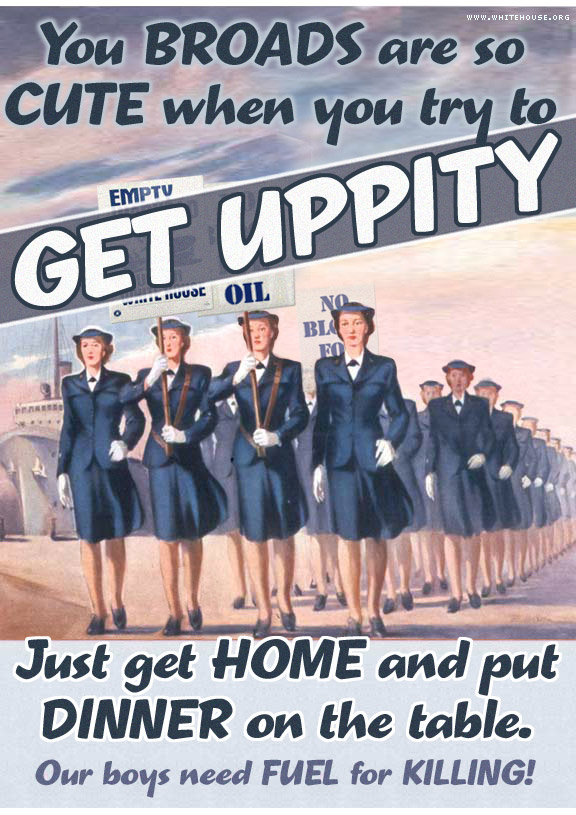
However, this blogger would like to draw all of your attention to the posters and T-shirts produced by the violently anti-Bush www.whitehouse.org website which is, quite simply, one of the best places for political satire on the planet. They're not subtle, admittedly, but they ARE wee-in-your-pants funny.

Among my particular favourites is this one.

Friday, March 17, 2006

Serenity

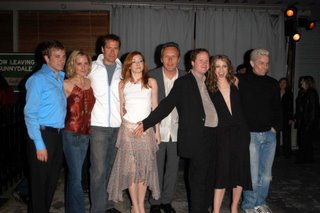
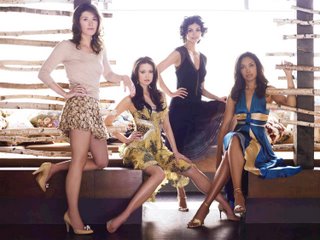
In full and frank tribute to having watched Joss Whedon's 'little movie' on DVD - Keith Telly Topping's opinion on which remains pretty much the same as when he saw it in the cinema: A decent (if somewhat flawed) movie that is, perhaps, and especially given the genre that it's a part of, a little too clever for its own good - here's the stars of the show.

Tell 'em all about it, ladies...

Technofear?

Is anybody else having trouble accessing the blog this morning? Or the Internet generally?

Doesn't it really piss you off? Frustrate you? Make you want to go out an torture innocent strangers for a laugh?

Don't you sometimes, you know, just want to smash your PC with a big effing hammer and then go and live in the jungle?

Wasn't the world a much simpler place when all we had was pen and paper?

Isn't this a complete waste of time as, if the blog can't be read by anyone then to whom is yer actual Keith Telly Topping talking?

Hello.... Is there anyone out there?


Wednesday, March 15, 2006

'Seen It In Yer Eyes, Read It In Books ...'

Today's bloggerisationisms-random-cover-generator produces the following.
Good book, that. Local author, apparently...

Anyway, it occurs to Keith Telly Topping that some people may have stumbled across this blog having heard the blogger on The Book Club on BBC Radio Newcastle (18:30 GMT, first Monday in each month - be there or ... be somewhere else).

If so, hello there, how y'doin'? Hope you're enjoying the show and, if so, please leave a comment.

For those who haven't heard it, basically, each month Keith Telly Topping reviews a bunch of recently released books along with regular features like a competition and guest interviews. It's pretty light and fluffy - we cover a bit of everything; books with local interest, pop culture subjects, biographies and autobiographies, some fiction, sporting books ... something for everyone, in fact.
So far, Keith Telly Topping has covered the following:

Show One: December
John Peel - Margraves of the Marshes, Bantam Press.
More Magpie Memories - Malcolm Holt, Breedon Books.
Shirt of Legends - Paul Joannou, Mainstream Books.
Elvis Untold Gold - Ace Collins, Souvenir Books.
Valley of Lights - Steve Gallagher, Telos Publishing.
Really Daft Ideas - DI Saster, Summersdale Books.
The Pedant's Revolt - Andrea Barham, Michael O'Mara Books.
I Hate Christmas - Daniel Blythe, Allison & Busby Books.
TV Classics: Our Friends in the North - Michael Eaton, BFI Books.
Serenity: The Visual Companion - Joss Whedon, Titan Publishing.
The Sky Sports Football Yearbook, Headline Books.
Does Anything Eat Wasps? And 101 Other Questions, Profile Books.
Show Two: January
Anansi Boys - Neil Gaiman, Review Books.
The Mercy Seat - Martyn Waites, Pocket Books.
Northstars - Chris Phillps, Sid Smith and John Tobler, Zymurgy Books.
Soapy Business - John Solomon, Zymurgy Books.
The Little Book of Tyneside, Zymurgy Books.
The Fashion of Football - Paolo Hewitt and Mark Baxter, Mainstream Books.
My Father & Other Working Class Football Heroes - Gary Imlach, Yellow Jersey Press.
Show Three: February
Spectre, Stephen Laws, Telos Publishing.
If I Don't Write It Nobody Else Will, Eric Sykes, Fourth Estate Books.
McCartney, Christopher Sanford, Century Books.
The Modfather, David Lines, William Heinemann Publishing.
The Brothers, Ian Lennox, Gordon Liberty Publishing.
Show Four: March
Balderdash & Piffle - Alex Grimes, BBC Books.
Fanboys & Overdogs: The Language Report - Susie Dent, Oxford University Press.
The Historian - Elizabeth Kostova, Time Warner Books.
Old Wives Tales: Lipstick, Powder & Paint - Carol Cooke, Business Education Publishers.
Never Have Your Dog Stuffed - Alan Alda, Hutchinson Books.
Alan Shearer: Captain Fantastic - Euan Reedie, John Blake Publishing.
The RaW Quick Reads
Other recent books received include:
Shaun Lyon, Doctor Who: Back to the Vortex, Telos Publishing.
Jim Sangster & Paul Condon, TV Heaven, Harper/Collins Publishing.
Guy de la Bedoyere, Hadrian's Wall, Tempus Books.
Bob Dylan, Chronicles, Simon & Shuster Books.
James Lovelock - The Revenge of Gaia, Penguin.
Dave Gibbons - The Originals, Titan Publishing.
Alistair Moffat & George Ross, Tyenside: A History of Newcastle and Gateshead, Mainstream Publishing.
Ian Mortimer, The Perfect King: The Life of Edward III, Jonathan Cape.
Robert Crais, The Two Minute Rule, Orion Books.
Ashes Victory: The official story of the greatest ever Test Series in the team's own words, Orion Books.
Neil Doyle, Terror Base UK, Mainstream Publishing.
Kathryn Sullivan, Talking to Trees, Amber Quill Press.
Bernard Cornwell, The Pale Horseman, Harper/Collins Publishing.

All of the above, incidentally, are highly recommended.

Each month Keith Telly Topping will be putting up a list of both books that he has covered on the show and an 'also received' list as he usually get too many review books each month to include twenty five minutes of radio time. In the next show, amongst others, Keith Telly Topping be looking at Raymond Khoury's new novel (The Last Templar) and both laughing and swearing at everyone who has never read The Prime Of Miss Jean Brodie, The Buddha Of Suburbia and Revolution In The Head.

No, actually, he won't be doing the latter - although he probably should.

If you're looking for a decent bit of rock journalism and you've never read either the late Ian MacDonald's Revolution In The Head, or Nick Kent's The Dark Stuff, or Charles Shaar Murray's Shots From The Hip then, frankly, you've never lived.
I think, though, if push came to shove, Keith Telly Topping's desert island book would still be either The Woman Who Slept With Demons by Eric Ericson (New English Library, 1980) which Keith Telly Topping bought in Soho for twenty pence or Testkill by Clifford Makins and Ted Dexter (Penguin, 1977) which he bought in Scarborough for ten pence, both of which got him through some pretty horrid family holidays with his sanity just about in tact.
Either that, or Doctor Who & The Day Of The Daleks by the great Terrance Dicks (Target Books, 1974), purchased (for about five pee) in Ryde on the Isle of Wight and which helped him overcome not only an 'orrible family holiday but, also, bronchitis during an 'orrible family holiday. So, double plus points there for Uncle Terrance.

Tuesday, March 14, 2006

My Favourite Words

Yer actual Keith Telly Topping is not sure just exactly why he hase chosen to include Paul and Paul's beautiful fizzogs to illustrate this particular bloggerisationisms posting (Smokey Robinson, Bob Dylan or Elvis Costello might've been more appropriate) although it is, undeniably, a very cool picture. It was, I believe, taken sometime during the winter of 1981-82 whilst The Jam and Macca were both in AIR Studios in Oxford Street recording The Gift and Tug of War, respectively. It was first published on the back cover of Smash Hits magazine circa February 1982.

Anyway... What this is, dear blog reader, is a list of this blogger's favourite words - in no particular order. If you spot any that are missing which you think should be featured, let Keith Telly Topping know and he will try to include them in whatever he's working on next:
MY FAVOURITE WORDS
  • namby-pamby

  • moist

  • hollow

  • quincunx

  • goitre

  • abeyance

  • thong

  • lugubrious

  • faux-naïf

  • risible

  • irksome

  • demisemiquaver

  • jiggery-pokery

  • oblong

  • yacht

  • rhombus

  • onomatopaeia

  • kitchen-knave

  • zeitgeist

  • crass

  • pretentiousness

  • blithering

  • parallelogram

  • snot

  • cromulent

  • plodding

  • lob

  • stymied

  • colloquialism

  • voluminous

My Gaff, Is A Very, Very, Very, Very, Very Fine Gaff

Now, as some of you hot-shot kiddies out there in 'netland may be aware Keith Telly Topping has been having various bits and pieces of work done on Stately Telly Topping Manor over the last couple of months - some with his willingly participation (new windows, electrics, et cetera.) others, less so (the back garden).

Keith Telly Topping's last trip to America was almost ruined by having all of this crap dumped on him just before he left. Anyway, to cut a very long story somewhat shorter, the work is pretty much finished now (apart, that is, from getting forty five boxes worth of books, CDs, DVDs, videos, magazines and other household essentials out of storage - that's going to happen sometime over the next few days).

So, whilst Stately Telly Topping Manor is in it's current, half-decorated-and-half-empty-but-actually-quite-tidy state, Keith Telly Topping thought he would do a quick 'before and after' photo competition.

Can you stop the difference, dear blog reader?

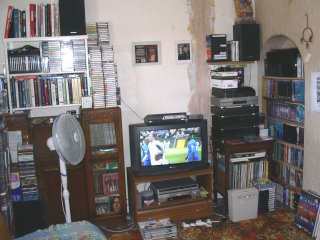
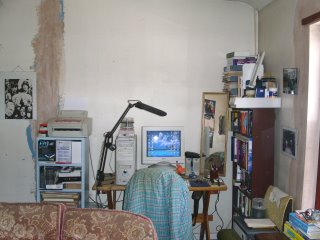
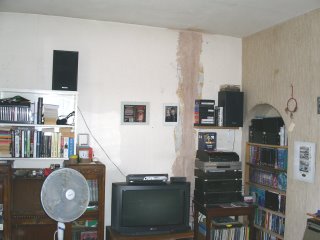
It used to look like this:

And now, it looks like this!
Ace, eh?! Don't worry about the massive plaster stain on the wall, that'll be gone soon enough.

Monday, March 13, 2006

Who I Am And How I Came To Be...

Ah, what a sweet little chap.

Recently the Beeb asked Keith Telly Topping to put together a pen picture of his very self to use on their RaW website to advertise The Book Club.

He did a short version but he also did a long version too which, because it'll never see the light of day elsewhere, he thought he'd share with y'all here. See, bloody ego the size of Rwanda:

HE’S AN URBAN GUERILLA HE MAKES BOMBS IN HIS CELLAR

A full-time survivor, dandy highwayman, bon vivant, raconteur and all round decent chap Rockin’ Keith Telly Topping is an extremely freelance author, journalist and broadcaster who first stumbled across Buffy The Vampire Slayer, quite by accident, in 1997 whilst he was still working as a mild-mannered Civil Servant by day and attempting to kick-start a pathetically underachieving writing career by night. To say that the series changed his life is, frankly, the under-statement of both the Twentieth and the Twnety First Centuries.
Keith Telly Topping's bibliography includes over forty books. He was the co-editor of two editions of The Guinness Book of Classic British TV (1993 and 1996) and has written or co-written books on television series as diverse as The X-Files, The Sweeney, Star Trek, The West Wing, The Avengers, 24 and Stargate SG-1 as well as volumes of music and film critique. He has authored four Doctor Who novels (including the multi award-winning The Hollow Men, co-written with Martin Day) and a novella (Ghost Ship). His books include two editions of the acclaimed West Wing guide Inside Bartlet’s White House, A Vault Of Horror: A Book Of Eighty Great (and not-so-great) British Horror Movies 1956-1974, Do You Want To Know A Secret?: A Fab Anthology Of Beatles Facts, A Day In The Life, High Times, Triquetra, The Complete Clash, Beyond The Gate, Shut It!: A Fan’s Guide To Seventies Cops-On-The-Box (with Martin Day: ‘Book of the Month’ in Loaded magazine) and X-Treme Possibilities and Doctor Who: The Discontinuity Guide (both with Paul Cornell and Martin Day).

He is also a regular contributor to numerous TV and genre magazines, including TV Zone, Xposé and Shivers and was a former Contributing Editor of DreamWatch. Keith Telly Topping is widely considered to be one of Britain’s foremost experts on the bewildering complexities of US network television. No, he has the faintest idea why either.

Notoriously articulate, erudite and a right wow with the ladies (allegedly), Keith Telly Topping was born in Newcastle Upon Tyne in October 1963 on the very day that his beloved United lost 3-2 at home to Northampton Town. Things haven't improved much since.

Keith Telly Topping is the presenter of the monthly Book Club and a bi-weekly television review slot  - Keith Telly Topping & His Tip TV Tips - on BBC Radio Newcastle. He has contributed to the BBC television series I ♥The 70s (albeit wearing a particularly nasty green shirt for which he wholeheartedly apologises to viewer). He has also written for Sounds, the Daily Telegraph and The Sunday Times Culture Supplement and many other magazines and periodicals.

Keith Telly Topping writes, and occasionally performs stand-up, and has written radio comedy, an (unproduced) stage play and a TV pilot that is, currently, stuck in 'Development Hell.' A failed pop star at the age of fourteen as bass guitarist in (the never-legendary) Slime, he lives, works and occasionally sleeps on Tyneside. His favourite six movies are The Godfather Part 2, Almost Famous (Untitled extended cut), The Usual Suspects, Apocalypse Now, A Matter Of Life & Death and Dr Terror's House Of Horror. Though not necessarily in that order.

He much prefers 'Can You Dig It?' by The Mock Turtles to 'Can U Dig It?' by Pop Will Eat Itself, and Joy Division's 'Atmosphere' to Russ Abbot's 'Atmosphere'. Perversely, he considers The Talking Heads' version of 'Take Me To The River' to be the definitive one, and not the Reverend Al Green's. But then, Keith Telly Topping was always weird like that.

And, he still dines out on the story of how he and three friends once stalked George Harrison down the entire length of Oxford Street.

The ultimate tragedy of Keith Telly Topping's life is that he would love to write the definitive Elvis Costello biography but knows he never will.

Keith Telly Topping's hobbies include socialising with friends, exotic foreign travel to wild and outrageous locations, loud guitar-based popular music, trashy SF television and even trashier British horror movies of the 1960s and 70s, football and cricket, tasty chicken and king-prawn curries from his favourite takeaway - the Kam Ming on Monkchester Road, military, social and local history, archaeology, wondering whatever the hell happened to both Nutz and Arthur Two-Stroke & The Chart Commandos and, most importantly, irking the purists and winding up the pseudo-intellectuals, the boneheads, the school bullies - especially those in their thirties - and the clowns and watching them squirm.

His autobiography, I've Had Her, will be published posthumously.

Self-indulgence, eh? It's what makes the world go round.