Friday, October 23, 2020

A Most Poor Man Made Tame To Fortune's Blows

The BBC has released two new images from the upcoming Doctor Who episode Revolution Of The Daleks. The festive special will see the return of one of The Doctor's most long-standing and, you know, hardest foes. The story begins where the previous series ended: With The Doctor banged-up in an intergalactic high-security Slammer. Isolated, alone, with no hope of escape and, generally, not very happy with her lot. Albeit, armed with some chalk.
Far away on Earth, meanwhile, her friends, Yaz, Ryan and Graham have to try to pick up the pieces of their lives without her. But it's not an easy task. Old habits die hard, especially when they discover a disturbing plan being formed. A plan which involves ... a Dalek (the title sort of gave that away, really, didn't it?) How can you fight a Dalek, without The Doctor? Poke it's eye out? No, sorry, that's 'How do you make a Venetian blind.' Always get those two mixed up.
Though it ended in 2006, The West Wing - the greatest TV show in the history of the medium ... that doesn't have the words 'Doctor' and 'Who' in the title - never really ended in many people's hearts. Fans of the US political drama have longed for some form of revival almost from the day that the final episoide was broadcast (the fact that the entire Barack Obama presidency was, effectively, The West Wing series eight notwithstanding). This remains true of this blogger who once, a lifetime ago, wrote a couple of books about the drama. It was with considerable anticipation from the masses, therefore, that in August 2020, it was announced Martin Sheen, Rob Lowe, Dulé Hill, Allison Janney, Richard Schiff, Bradley Whitford and Janel Moloney (plus, many of the supporting cast) would reprise their roles. For a stage version of the acclaimed 2001 episode Hartsfield's Landing, intended to raise awareness and support for When We All Vote, a non-profit organisation founded to increase participation in US elections. 'We've gotten the band back together,' as Brad Whitford said at the beginning of the broadcast. Production took place Los Angeles' Orpheum Theatre, the episode was shown on 15 October on HBO Max and this blogger finally got a copy sent over from the US this week. The role of Leo McGarry was played by Sterling Brown, the late John Spencer having, of course, sadly died in 2005. Emily Procter read the stage directions and Marlee Matlin and Elisabeth Moss also made appearances. The production included additional material written by creator Aaron Sorkin and Eli Attie and was directed by Thomas Schlamme and act-breaks featured guest appearances from When We All Vote co-founders Michelle Obama and Lin-Manuel Miranda, plus former president Bill Clinton and Samuel L Jackson. Music was performed by West Wing composer Snuffy Walden and The Avett Brothers.
Perceptions that this might have been a case of 'preaching to the converted' - again, as Whitford said in the introduction, 'arrogant actors telling you what to do' - the reception for the production was hugely positive from both critics and viewers alike. CNN's Brian Lowry characterising the special to 'approximate the experience of watching a stage play, only with a best-seat-in-the-house view,' including 'shooting the performers from behind and revealing the rows and rows of empty seats,' what Lowry considered 'a poignant reminder of what's been lost on the theatrical front since the pandemic began.' Patrick Gomez of The AV Club wrote 'the special always stays on the right side of being a Very Special Episode.' Ben Travers from IndieWire considered '[as] a reimagining of a strong television episode, the new version of Hartsfield's Landing plays out beautifully.' Daniel Fienberg of The Hollywood Reporter added it was '[a] solid recreation of a solid episode for a solid cause.' Deadline said that the episode was A Sobering Reminder Of When Presidents Were Presidential, At Least On TV. From this blogger's viewpoint, watching this was both a welcome and a sad experience. Welcome, obviously, because this is The West Wing and it was, frankly, stunning - indeed, the only way it could, possibly, have been any better would've been if Josh and Donna had got their kit(s) off and done The Sex right there on the stage for all to see. (That may, admittedly, be the 'shipper-fan lurking within this blogger having, briefly, taken over this review.) This blogger virtually chanted his way through the episode like he was at a rock gig knowing, as he does, that particular script backwards. 'You're a good father, you don't have to act like it. You're the President, you don't have to act like it. You're a good man, you don't have to act like it. You're not a regular guy. You're not "just folks", you're not plain-spoken ... Do not, do not, do not act like it!'
But it was also sad because it was an, at times, awkward and uncomfortable reminder of an era - not that long ago either - when television made this kind of challenging, thoughtful, sincere, outspoken drama effortlessly. And now ... it doesn't very much - if at all. The world has become a colder, harsher, more nasty and far less inclusive place, dear blog reader (and this was before Coronavirus came along and made the situation a hundred times worse). And - this is the real tragedy - we are all of us, to a greater or lesser degree, responsible for the critical and commercial conditions in which such a lack of ambition, empathy and, frankly, decency exists.
It's worth considering this, dear blog reader; when Hartsfield's Landing was first broadcast, America's president at the time was George W Bush and pretty much everyone who hadn't voted for him in the US (and everyone outside America) considered that he was, without any shadow of a doubt, the worst president that had ever, or would ever, be (even worse than Nixon fer Christ's sake). There couldn't possibly be anyone worse than Dubbya out there, that wasn't even open to question. Almost two decades on and A West Wing Special To Benefit When We All Vote was a useful, necessary, reminder of a truism which the original series included as a specific plot point on more than one occasion: Be very careful what you wish for, dear blog reader. Because it might just come true.
This blogger first saw the band The Go-Go's supporting Madness and The Specials at a club in Sunderland in April 1980, dear blog reader. In front of an audience composed almost entirely of mods and skinheads (who, even though they both liked the two headliners hated each other and, at various points between sets enjoyed kicking the shit out of anyone within easy reach; thus acting out, with surreal accuracy, the opening verse of The Specials' song 'Do The Dog'), a five-piece female group from Los Angeles went down, predictably, like a sack a diarrhoea with the majority of those in the gaff. This blogger thought they were adorable; nothing particularly special musically at that stage in their development but he particularly enjoyed a moment when one of the numbskulls in the crowd shouted 'Get yer tits out.' 'We're nice girls, we don't do that,' replied Belinda Carlisle. 'Yeah,' added Jane Wiedlin. 'So, go fuck yourself!' The place promptly erupted in a hail of beer bottles, hockle and incandescent fury. How could one not fall, instantly, in love with that?
Alison Ellwood's superb documentary about the band which this blogger watched on Sky this week was a timely reminder that women in rock and/or roll face some massive disadvantages. Due to their lack of a collective penis, mainly. A story of triumph against all the depressingly sexist odds - including coke binges, heroin addiction, playing Saturday Night Live drunk, heart surgery, bi-polarity, break-ups, reunions, more break-ups and so on - The Go Go's mixed contemporary interviews with Carlisle, Wiedlin, Charlotte Caffey, Kathy Valentine and Gina Schock, plus management, former members and friends (including Lee Thompson and Lynval Golding) with much, impressive, archive footage. They gave Rolling Stain magazine a, long-overdue, kicking for their outrageous 1982 cover-shoot of the group in their vests and panties although the constant whinging about the fact that they haven't been nominated for the Rock and/or Roll Hall of Fame yet quickly grew tiresome. You're in a very select group, ladies - neither have The Specials or Madness. Or The Jam or The Smiths. Or Kraftwerk for that matter! They bitched about each other with considerable glee but, as Schock perceptively noted, sisters fight with each other all the time. And, at the climax, they recorded their first new song in nearly two decades, a sharp little jangly rocker 'Club Zero'. Ellwood - as with her previous documentaries about The Eagles and the Laurel Canyon scene - drew together the various strands of the story with wit, economy and knowing exactly which bits to leave on the cutting room floor (Schock and Valentine suing their bandmates over royalties being the most obvious example of something, perhaps wisely, left with their lips being, as it were, sealed). What we ended up with was, actually, genuinely heart-warming and a bloody good excuse to pull out ones well-worn copy of Beauty & The Beat. And, not for nothing, but they remain - all of them - fine-lookin' ladies (especially Kathy who is still effortlessly packing that 'slightly surly West Coast rock-chick thing' she always had going for her). It seems the love affair which began for this blogger in Sunderland in 1980 hasn't ended yet.
Production on two From The North comedy favourites, Qi and Would I Lie To You?, has been badly affected by the same Coronavirus malarkey which has conspired to fek-up so much else this year - on TV and elsewhere. In the case of Qi, the show was nine episodes into production on its R series when lockdown occurred in March. Two further episodes were then filmed without a studio audience and proved to be, sadly, disastrously disappointing (the fact that one of them featured both the extremely annoying Holly Walsh and scowly-faced misery-guts Bridget Christie didn't help matters, admittedly). It was something which few of us had previously considered but, in truth the audience makes Qi work (another long-running BBC comedy panel show, Have I Got News For You, had a similarly awkward transition from a studio production to being filmed using Zoom in people's kitchens during March and April. That didn't come out very well as an audience spectacle either). According to a report in August, further series R Qi episodes were planned to be recorded with a 'virtual audience' via Zoom. Whether (or when) that will happen has yet to be confirmed. At least the first nine episodes were, mostly, up to the usual high standard and, in particular, this blogger was delighted to see the Goddamn righteous Benjamin Zephaniah making his Qi debut. Would I Lie To You? got the last few episodes of its thirteenth series out of the way early in the year before The Plague hit town (the one featuring Richard Osman and Steph McGovern being a particularly good example of the show at its best) but, thereafter there was silence regarding when it would return. Finally, last week, came some welcome news - via Reddit. Another batch of episodes has been filmed - importantly with audiences - earlier this month, though there has no announcement as yet when they will be broadcast. And yes, before you ask dear blog reader, series regular, From The North favourite and genuine twenty four carat national treasure Bob Mortimer will feature in one episode (along with another much-loved contributor, Miles Jupp). Thankfully, Dave's virtual wall-to-wall repeats of both shows have kept audience's entertained as they contemplated the inherent ludicrous nature of existence for the past few months. What would we do without Dave?
On a somewhat related theme, given that lockdown is, effectively, upon us all once more this blogger has just started compiling this year's From The North 'best and worst TV of the year' awards. It'll be a good six weeks before it's finished, obviously (the annual award bloggerisationism usually tend to get posted on this blog around the end of November or the start of December). But at least writing it will keep this blogger off the streets for a while. Which is, sort of, the point, I guess. As noted previously, each year when Keith Telly Topping posts these awards, he usually gets a handful of e-mails saying something along the lines of '... but, you missed off [insert own favourite here].' Since answering such comments is always a right flaming pain in the dong, it's worth stating once again that these awards represent what this blogger has been watching and enjoying (or, in the case of anything featuring Bloody Jack Bloody Whitehall, really disliking) during the last year. If a programme is not mentioned, it is either because Keith Telly Topping didn't see it or did, but didn't consider it worthy of inclusion, thereupon. If, when it's published, you disagree with anything therein (or, not therein) dear blog reader, please feel free to start your own blog and do your own best and worst awards.
It was proper fantastic to see the legend that is Mitch Benn as a contestant on Only Connect a couple of weeks ago. Second best thing about that episode, in fact, after The Divine Victoria's joke about a salmon.
And now, dear blog reader, a new From The North semi-regular feature, Great Moments in Rock and/or Roll History. Number Thirty Two: The day Thelma Barlow got top billing over two members of The Be-Atles (a popular beat combo of the 1960s, you might've heard of them).
WANTED: Drummer for four-piece two guitar/bass popular beat combo with recording contract and some chart potential. Must have excellent hair. No time wasters, please.
For reasons which are far too complicated to go into at this time, for the past few months this blogger has been unable to play any of the - not inconsiderable number of - non-Region 2 DVDs which he has picked up over the years. Fortunately, with a bit of fiddling to the leads on one of Stately Telly Topping Manor Plague House's several DVD players (the oldest one Keith Telly Topping has, as it happens) which is multi-region, this blogger managed to connect it to Stately Telly Topping Manor's massive flat-screen telly. And, therefore, he is delighted to report that this is, once again, a multi-region Plague House in all its forty two-inch widescreen mega-glory. Which is nice.
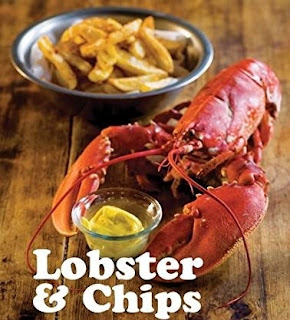
Now, a few items which caught (and, briefly, retained) this blogger's attention on the BBC News website. Firstly, Fleetwood Fishmonger Saves 'One In Thirty Million' Orange Canadian Lobster. A lovely, genuinely heart-warming story. Though, this blogger is still willing to bet that the lobster in question would've tasted great if garnished with lemon drizzle and served on a plate of chips and/or rice. Just saying.
Another heart-warming story, Billionaires See Fortunes Rise By Twenty Seven Per Cent During The Pandemic. Because, let's face it, we were all so worried about how those guys were doing during these dark and desperately troubled times.
Also, there was Durex Condom Sales Jump After Virus Rules Relaxed. No shit? Well, what a surprise ...
Of course, it's worth pointing out that lockdown led many people to discover all manner on new forms of in-home entertainment.
To sum up the gist of this story, those taking part in last month's 'Hell No, We Don't Wanna Wear A Mask' rally in London appear to have consisted of an unholy alliance between conspiracy theorists, Covid-deniers, extreme right-wing troublemakers, extreme left-wing troublemakers and people who just fancied a right good punch up with Plod. God bless this virus, therefore, for bringing together this wide - and highly disparate - group of individuals. So, we all know whom to avoid in future (if we weren't avoiding them already). Listen, you stupid, selfish bastards, it's very simple - you may not have any concern about your own safety and that's entirely fine. But, every time you breathe on any of us that do wish to, you know, stay alive, you're not merely risking your own health. Please, this blogger says the following with all necessary respect, grow the fek up, will you. And do what you're told just like the rest of us. It's The Law. This particularly applies to students in Nottingham who are now working out how to pay their fines.
Sometimes, of course, BBC News provides some extremely wise words for us all to consider and reflect upon.
However, the worst piece news lately - by a considerable distance - came from the Gruniad Morning Star. Haven't we Northern folk suffered enough already without having him (and, presumably, his lute) inflicted upon us?
There is an Interweb meme which has been doing the rounds lately that you may be aware of, dear blog reader. It, or variants of it, have been seen all over the Twitter and Facebook pages of lots of people (who, seemingly, think they're being terrifically original when they post it). This blogger would like to assure all of you that his grandmother, Elizabeth MacKay Elliott Lamb, born in 1895, did precisely none of these things. Just so we're clear about that. He's less-certain about what Granny Telly Topping got up to, admittedly. 
Meanwhile, dear blog reader, with the arrival of autumn at the Stately Telly Topping Manor Plague House, there have been a number of days where it's been more than a bit nippy in the gaff.
And thus, it did come to pass, dear blog reader, that yer actual Keith Telly Topping had spent one particular day virtually on the starve and, by 5.30pm he was, like, Pure Dead Hank Marvin, so he was. Thence, it further came to pass that he picked up the dog-and-bone and rang one of his local takeaways and sayeth unto Linda: 'Yer actual Keith Telly Topping realises it be-eth a Goddamn filthy night out tonight, but could you possibly deliver unto the Stately Telly Topping Manor Plague House at your earliest convenience a dozen of your finest salt and chilli prawns (with a side order of boiled rice) so that he may scoff these in his righteous hunger (with some freshly-cooked garlic bread). Because, yer actual really deserveth this happenstance in the area.' And lo, he saw that it was good. And this pleaseth yer actual Keith Telly Topping who sayeth unto the multitude 'I am satisfied.' Amen.
This blogger last did his - government sanctioned - weekly shop in town at M&S, Boots, Poundland, Greggs and Morrisons at the weekend. See below for proof of purchases. Yes, dear blog reader, this is a really bad photo, caused by Keith Telly Topping trying to do about eight things at once. He was going to take another one but, actually, he quite likes the 'action blur' on this; it makes it look as though the Stately Telly Topping Manor Plague House's comestibles are all in a state of perpetual motion. Which they aren't, incidentally, but it would be pure-dead-cool if they were. Anyway, it was a decent trip - a nice warm sunny early autumn day. And everyone this blogger encountered was really pleasant - he made sure, as he always tries to do, when having paid for his goods and/or services, to thank the checkout operator and/or bus driver, wish them a good day and add 'stay safe.' Bit of a cliché, this blogger is aware, but you'd be surprised at how few others one hears saying anything similar. And, to a man/woman, all of them replied 'thanks very much and the same to you.' Keith Telly Topping was, therefore, in a really smashing mood when he got to the bus stop outside Morrisons to come back to the Stately Telly Topping Manor Plague House, put his feet up and rest his still troublesome bad back. And, at that precise moment, this blogger had his good mood shattered into a million tiny fragments when some spotty, lanky, skinny twentysomething twonk who wasn't wearing a mask sneezed all over this blogger from about two feet away. This blogger, thankfully, was wearing his mask but there's no telling what infections may have sneaked past the protection. So if, in about ten days time, Keith Telly Topping is in the Royal Victoria Infirmary on a ventilator, being pumped full of steroids (which, actually, sounds quite nice) and/or bleach and is at death's door, you'll know whom to blame.
Opening up his e-mail the following morning, this blogger found one which had the header Suffering from erectile dysfunction? Keith Telly Topping immediately responded to this with a reply headed Who have you been talking to?
And still, dear blog reader, From, The North's daily traffic continues to hover around an average of six thousand hits per day.
... From, it should be noted, a bewildering variety of dear blog readers around the globe. See if you can spot yourself.
A bit more politics, dear blog reader. And, the news that Mark Hamill now owns the Interweb. Not before time, either.
Frank Windsor, who has died aged ninety two was, as Detective Sergeant John Watt, one of the longest-serving coppers on TV - in Z Cars and several BBC sequels and spin-offs from 1962 through to 1978. At that point, Windsor returned to the theatre to play a dotty doctor in Tom Stoppard's Every Good Boy Deserves Favour at The Mermaid Theatre – with music by André Previn and directed by Trevor Nunn - revealing another side to his talent, that of an incisive and hilarious comic actor; he'd given us a taste of that when he took over briefly from Patrick Stewart as an absurdly barnstorming Lenin in Stoppard's Travesties at The Aldwych in 1974. But it proved impossible for him to shake off the long arm of the law enforcer entirely. Z Cars was one of the great dramas of its time and few dramatic double acts on the small screen - asie from Eric Morecambe and Ernie Wise - matched that of Stratford Johns as the truculent Detective Inspector Charlie Barlow and Windsor's stern, if infinitely more sympathetic, Watt as they chased down the criminals in Newtown, a fictional version of Kirkby in Merseyside.
Z Cars highlighted the issues of control in public and private arenas into the new postwar realities of the welfare state; unemployment, domestic violence, gang rivalry and cultural fragmentation. Week-in, week-out, brilliantly acted and produced, it was compelling viewing. It dealt with the realities of policing a large city; in tone it was a million miles away from the BBC's other popular crime drama of the era, Dixon Of Dock Green and made stars of many of its regular cast - including Brian Blessed, James Ellis, Jeremy Kemp and Colin Welland. After three years, in 1966, Barlow and Watt were detached, promoted - to Chief Superintendent and Chief Inspector, respectively - and relocated in a new series, Softly Softly, to the fictional region of Wyvern, somewhere near Bristol. They moved again, in 1969, to Thamesford constabulary's CID, the series renamed Softly Softly: Task Force. When Johns peeled off into his own series, Barlow At Large, Windsor as Watt battled on for another few years with a variety of different partners on Softly crime watch. But the pair were reunited in two mini-series within the franchise, the first, in 1973, reopening the case files on Jack The Ripper, the next - Second Verdict - re-examining other, more recent real-life murder cases.
Windsor, who was born Frank W Higgins, in Walsall - his father was an accountant in local government - was educated at Queen Mary's grammar school and trained for the stage in London at the Central School of Speech and Drama, still situated in the early 1950s at the Royal Albert Hall. He toured in Britain and India with the Elizabethan Theatre Company of Thane Parker, who also ran The Oxford Playhouse, where Parker appointed Peter Hall as artistic director in 1954. The actors alongside Windsor in that first Oxford season included Billie Whitelaw, Maggie Smith, Tony Church and a very young Ronnie Barker and Windsor soon moved into television playing the Crown Prince Rudolph of Austria in a BBC Sunday Night Theatre play of 1955 and, two years later, the Duke of Norfolk in an adaptation of Robert Bolt's A Man For All Seasons. Windsor's experience in Shakespeare with Parker made him well qualified to play the Earl of Warwick and Sir Walter Blunt, among other characters, in the landmark BBC series of Shakespeare histories, An Age Of Kings (1960). He played a dentist in Lindsay Anderson's new-wave classic This Sporting Life (1963), with Richard Harris, Rachel Roberts and William Hartnell, but his movie career - small parts in Peter Hammond's Spring & Port Wine (1970) with James Mason and John Schlesinger's Sunday Bloody Sunday (1971) with Glenda Jackson and Peter Finch aside - never really took off thanks to his regular police duties.
When he did break out, into the Stoppard stage roles, he underlined his rich vocal authority and commanding presence in another dimension. He followed up with a West End thriller, Mister Fothergill's Murder (1982) by Modesty Blaise author Peter O'Donnell at The Duke of York's, with Rula Lenska and David Horovitch and joined the cast of Hugh Whitemore's spies-in-suburbia drama Pack Of Lies at The Lyric in 1984. And, then there was a twelve-week national tour of Holmes & The Ripper. Television fame did not translate into theatrical stardom, perhaps unjustly and he spent the last twenty years of his active career appearing in such long-running series as Lovejoy, EastEnders (as Major Charlie Grace), Midsomer Murders, Peak Practice, Casualty and, in 2002, as Sir James Valentine, in Judge John Deed. He also appeared in The Avengers - 1968's Whoever Shot Poor George Oblique Stroke XR40?, the first episode of Randall & Hopkirk (Deceased), Headmaster, Middlemen, The Goodies (a gorgeously funny over-the-top turn as The Scoutfinder General in 1977's Scoutrageous), the 1979 version of Eric Sykes's The Plank, Play For Today, Thirty Minute Theatre, Into The Labyrinth, Chancer and September Song. He featured in Doctor Who twice. In 1983 he played the kindly Crusade-era nobleman Ranulf Fitzwilliam in the Peter Davison story The King's Demons. In 1989 he returned opposite Sylvester McCoy's Doctor playing, unsurprisingly, a police officer, Inspector Mackenzie, in Ghost Light.
He could never, quite, shake off John Watt - he even played versions of his most famous character in comedy series like The Detectives and Paul Merton's Life Of Comedy. He came close, though, as Gridley, 'the man from Shropshire,' in the BBC's second of their three versions of Dickens's Bleak House (1985, starring Diana Rigg and Denholm Elliott), making an excellent fist of the ruined old Chancery suitor with a combative look and a chafing, dissatisfied manner. In later years appeared in a number of television commercials advertising life-assurance policies for people over fifty, a role he was happy to parody in a sketch on Harry Hill's TV Burp. Windsor is survived by his wife, Mary Corbett, a former dancer and their daughter, Amanda. A son, David, died in a tragic car accident in 1997.
American singer-songwriter Johnny Nash, best known for the 1972 hit 'I Can See Clearly Now', has died aged eighty. Nash, whose health had been in decline for some time, died at his home of natural causes, his son told US media. The musician began singing as a child and made his major label debut with the 1957 song 'A Teenager Sings The Blues'. Nash, born in Houston, was one of the first non-Jamaican singers to record reggae music in Kingston. His single 'I Can See Clearly Now' sold more than a million copies and reached the top of the Billboard chart in 1972, where it remained for four weeks. He also had a number one hit in the UK in 1975 with 'Tears On My Pillow'. Nash also, famously, helped reggae legend Bob Marley sign a recording contract. Nash's covers of songs like 'Stir It Up' helped to bring Marley's music to a broader audience and the pair later collaborated on 'You Poured Sugar On Me'. In an interview with Zoo World magazine in 1973, Nash told Cameron Crowe that he hoped his music had wide appeal. 'I feel that music is universal. Music is for the ears and not the age. Everybody likes music, from eight to eighty. There are some people who say that they hate music,' he added. 'I've run into a few, but I'm not sure I believe them. Maybe they have never been without music.' Besides his son, John, Nash is survived by his wife, Carli.
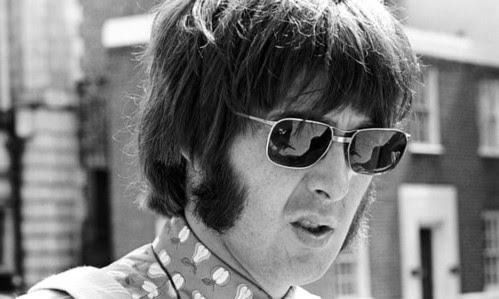
Spencer Davis, one of the key figures of the 1960s beat scene, has died at the age of eighty one. The Welsh guitarist was the driving force behind The Spencer Davis Group, who scored transatlantic hits with 'Keep On Running', 'Somebody Help Me', 'Gimme Some Lovin' and 'I'm A Man'. The band, which also featured the teenage Stevie Winwood, toured with The Who and The Rolling Stones. Davis died in hospital on Monday, while being treated for pneumonia, his agent told the BBC. 'He was a very good friend,' said Bob Birk, who had worked with the musician for more than thirty years. 'He was a highly ethical, very talented, good-hearted, extremely intelligent, generous man. He will be missed.'
The son of a paratrooper, Davis was born in Swansea in 1939 and first started learning harmonica and the accordion at the age of six. He moved to London to work for the civil service at the age of sixteen, but later relocated to Birmingham, where he taught German by day and played in local clubs at night. Inspired by blues and skiffle, he formed a band called The Saints which, initially, included a pre-Rolling Stones Bill Wyman and also performed folk music with a young Christine Perfect. But it was with his eponymous rock group that he struck gold. Formed in 1963, The Spencer Davis Group featured Davis on guitar, sixteen year old Stevie Winwood on keyboard and vocals, his brother Muff on bass and Peter York on drums. Originally called The Rhythm & Blues Quartette, they changed their name in 1964 when Muff pointed out that Davis was the only one who enjoyed doing interviews - the logic being that the rest of the band could slope off to the pub while he handled the press. Their breakout hit, 'Keep On Running', was a cover of a song by West Indian performer Jackie Edwards. When it topped the UK charts in January 1966, it knocked The Be-Atles 'Day Tripper' from the top slot - and Davis received a telegram from the band congratulating him on the achievement.
The follow-up was delayed when Davis bashed his head on a car windscreen after braking to avoid a dog - but 'Somebody Help Me', another Jackie Edwards cover, gave the quartet a second number one in March. The band went on to prove they had songwriting chops of their own, with hit singles like the furious 'I'm A Man' and 'Gimme Some Lovin' both of which made the UK top ten. The Spencer Davis Group also recorded the famous theme song for the long-running children's TV show Magpie, under the pseudonym The Murgatroyd Band - a reference to the show's mascot, a fat cartoon magpie. The band starred in their own film, an (admittedly rather slight) musical comedy called The Ghost Goes Gear (1966), which found the band stranded in a haunted manor. Davis also made a cameo in The Be-Atles' TV movie Magical Mystery Tour, as one of the passengers. Hits followed in the US - including their gorgeous cover of 'Every Little Bit Hurts', although the band never toured there; while Davis's ability with languages (he was fluent in German, French and Spanish) helped the band further their career in Europe. Those linguistic capabilities even led to Davis recording a German version of 'The Age Of Aquarius' ('Aquarius Der Wassermann') in 1968 and earned him a lasting nickname: 'The Professor'.
However, the Spencer Davis Group came to an untimely end in 1967 when, at the height of their fame, when Winwood quit to form Traffic, leaving Davis without his dynamic frontman. The band recorded a few more minor hits, but broke up soon after, with Davis moving to California, where he embarked on a short-lived solo career. At the time, he later claimed, he was near to bankruptcy, thanks to a punitive contract with Island Records. 'I didn't realise what had been going on. I'd sold millions of records and hadn't seen a penny from them,' he told Music Mart magazine in 2005. 'In 1970, I was considering declaring bankruptcy, but I'd written a track with Eddie Hardin, called 'Don't Want You No More', which The Allman Brothers put on their Beginnings album. The damned thing sold six million copies. Suddenly a cheque for five thousand pounds arrived through the door and I'd never seen so much money in my life. I saw more money from that one song than I [received] from all the stuff that had been an Island production.' After confronting Island's owner, Chris Blackwell, over the issue, he was given a job in artist development at the label in the mid-1970s. There, he helped to promote newcomers like The Wailers, Robert Palmer and Eddie & The Hot Rods, as well as working alongside Winwood, who was now establishing himself as a solo artist. Davis returned to songwriting with 1984's Crossfire, which featured contributions from Dusty Springfield and Booker T Jones. He made numerous guest appearances with such headliners as The Grateful Dead and Hall & Oates, then formed The Classic Rock All Stars in 1993.
In 1996 he upgraded this to The World Classic Rockers, which included Randy Meisner from The Eagles, Carmine Appice from Vanilla Fudge and the former Paul McCartney sideman Denny Laine. In 2001, he began touring with a rebuilt Spencer Davis Group - albeit without the Winwood brothers. In 2006 he released the LP So Far, on which he looked back at his Welsh roots with songs such as 'The Swansea Shuffle' and 'Uncle Herman's Mandolin'. In 2017 The Spencer Davis Group played its last dates, utilising two different line-ups (both featuring Davis) for dates in Europe and the US. Birmingham International Jazz Festival founder Jim Simpson, who was told about Davis' passing by drummer Pete York, said: 'Spencer was a lovely man - always very courteous and a purist about music. The Spencer Davis Group stuck more to the blues and never became a fully-fledged rock band. Spencer was scholarly and well educated, very gentle and kind and his tastes in music were spot on.' The musician is survived by his long-time partner June Datne, three children - Lisa, Sarah and Gareth - and five grandchildren..
Margaret Nolan, the actress best known for appearing in the title sequence for Goldfinger and for a string of appearances in TV shows in the 1960s and 70s, has died aged seventy six. Film-maker Edgar Wright, who directed Nolan in her final film role, in the forthcoming Last Night In Soho, reported the news on social media. Nolan, who was born in 1943 in Somerset, first appeared on film under the name Vicky Kennedy in 'glamour' (for which read 'softcore') shorts by the notorious George Harrison Marks, appearing in his naturist film It's a Bare, Bare World.
She soon graduated to more mainstream films, with a noticeable role in Dick Lester's A Hard Day's Night (as the girl accompanying Wilfrid Brambell in a casino) and Goldfinger, as the masseuse Dink.
Nolan also appeared in Robert Brownjohn's celebrated title sequence for the same movie, wearing a gold bikini and with images projected on her skin - though in the film itself it was Shirley Eaton who played Jill Masterson, the girl who gets smothered to death by gold paint.
Margaret Ann Nolan was born in Norton Radstock, Somerset in 1943. Her father was serving in the Army and her mother took her to neutral Ireland for the duration of the Second World War. She was training to be a teacher when she met her husband Tom Kempinski, who was an actor with The National Theatre. Nolan and her twin sister, Geraldine, had staged their own plays when they were children and Kempinski encouraged her to consider acting as a career. Nolan quickly outgrew her glamour-model beginnings and forged a reputation as a performer of great likability, with small roles in films as varied as Michael Reeves' Matthew Hopkins: Witchfinder General, The Great St Trinian's Train Robbery, the Marcel Carné drama Three Rooms In Manhattan and in a deleted scene in Hitchcock's Frenzy.
She also began a long association with the Carry On movie series, beginning in 1965 with a role as a secretary in Carry On Cowboy. She would go on to appear in five more, finishing in 1974 with Carry On Dick. At the same time, Nolan developed a prolific career in TV, with guest roles in a wide variety of programmes, including The Saint, Adam Adamant Lives!, Spike Milligan's The World Of Beachcomber and Q6, Budgie, Steptoe & Son, The Persuaders!, The Sweeney, Fox and Whatever Happened To The Likely Lads? After the mid-1970s Nolan stepped back from acting, but did appear as the dancehall girl Effie in the celebrated TV adaptation of Brideshead Revisited in 1981.
Nolan went on to develop an interest in visual arts and her piece My Divided Self - a cut-up collage of her own publicity stills - was included in the feminist exhibition Equals in 2013 in Manchester's Blankspace gallery. In an interview in 2007, Nolan described her artworks as 'the idea that I was there as this passive woman, being looked at, but behind it all, behind my eyes, of course I knew what was going on.' Nolan also became involved in politically-inflected theatre in the early 1970s, influenced, she said, by Kempinski's experience of the 1968 évènements in Paris. She and Kempinski divorced in 1972. He later enjoyed success as the writer of the play Duet For One. Margaret is survived by her two sons, Oscar and Luke.
And finally, dear blog reader, yer actual Keith Telly Topping went into a pub one lunchtime and asked them if he could get toad-in-the-hole. He did. And he really didn't deserve that.

Saturday, September 26, 2020

Now I See The Mystery Of Your Loneliness

Welcome you are, dear blog readers, to the latest From The North bloggerisationisms update. And we kick-off with some, for a change, actual proper good news. Trust me, dear blog reader, Keith Telly Topping was every single bit as surprised as you, undoubtedly, are at this happenstance. Anyway, the Digital Spy website has reported that Doctor Who is 'on course to begin filming for the first time since the pandemic.' Following, unconfirmed, reports - in several spectacularly uninformed tabloids - that Doctor Who 'may' be off-air until early 2022 (fantastically imprecise word 'may' don't you think?), Digital Spy claims that it has 'learned' the BBC's popular long-running family SF drama's production team are 'still planning to begin filming this year as [originally] planned.' Should that schedule fall into place, alleged 'insiders' allegedly remain allegedly 'hopeful' that the thirteenth series will be screened in Autumn 2021. Allegedly. This latest development is, Digital Spy suggest, 'a hugely positive sign, following showrunner Chris Chibnall revealing in Doctor Who Magazine back in May that his team were hoping filming could happen later in the year.' Doctor Who will be back on screens before then, of course as Jodie, yer actual Bradley Walsh, Tosin Cole and Mandip Gill filmed a festive special, Revolution Of The Daleks before the nasty pandemic struck.
Jodie Whittaker, meanwhile, will face 'some fraught family history' when the popular genealogy series Who Do You Think You Are? returns to BBC1 for a four-part series in October. Joining Jodie in the new series will be David Walliams, Ruth Jones and Silent Witness actress Liz Carr. So, at least two of those episodes should be well-worth avoiding like the plague. Jodie, according to the Radio Times, 'learns the poignant reality behind a family myth surrounding her great uncle's sacrifice in World War One, while unearthing some uncomfortable truths about her great-great grandfather in Yorkshire.' One of her predecessors in the TARDIS, yer actual national heartthrob David Tennant, previously appeared in Who Do You Think You Are? in 2006. John Hurt also featured in the series the following year. 
HBO Max will premiere a West Wing 'special' in aid of When We All Vote on 15 October. The production reunites most of the original cast of the greatest TV show in the history of the medium that doesn't have the words 'Doctor' and 'Who' in the title and the creative team of The West Wing for a theatrical stage presentation of the third-series episode Hartsfield's Landing - a particular favourite of this blogger. 'This staged reading is currently being filmed at the Orpheum Theatre in Los Angeles, following strict Covid safety protocols,' according to the Theatre Media website. Rob Lowe, Dulé Hill, Allison Janney, Janel Moloney, Richard Schiff, Bradley Whitford and Martin Sheen reprise their roles, with further casting to be announced (another actor will, obviously, need to take the place of the late John Spencer). 'It will feature new material written by West Wing creator Aaron Sorkin and will be staged by the show's long-time director, Thomas Schlamme.' Additionally, A West Wing Special To Benefit When We All Vote will include act breaks with guest appearances from When We All Vote co-chair Michelle Obama, former President Bill Clinton and Lin-Manuel Miranda. Composer WG Snuffy Walden will perfom his iconic West Wing theme on guitar, with The Avett Brothers closing the show with a performance. In the 2002 episode Hartsfield's Landing, President Bartlett plays a game of chess with Sam and Toby while simultaneously dealing with a foreign policy showdown with China. At the same time, Josh nervously waits the erection results in the small titular New Hampshire town's presidential primary, which is traditionallyknown for accurately predicting the state's winner.
Things we learned from television during the last fortnight. Number one: This week saw the welcome return for a new series of From The North favourite Only Connect and it was jolly gratifying to note that - despite months of lockdown and other general life-altering shenanigan-type affairs - this blogger retains his uncanny ability to get the answer to but one Only Connect question right in every episode before either of the teams do. And, as usual, it was the TV/movie-related one.
Things we learned from television during the last fortnight. Number two: Someone in the Match Of The Day graphics department seemingly doesn't know how to spell 'Newcastle'.
Things we learned from television during the last fortnight. Number three: Watching one of this week's episodes of Government Advice From A Dying Planet, fronted by the Prime Minister his very self, a thought occurred to this blogger. And, the thought was this ...
There was some further jolly good news which arrived, hotfoot, at the Stately Telly Topping Manor Plague House this week. Specifically, the forthcoming reissue - by those lovely people at Telos Publishing - of A Vault Of Horror: A Book Of Eighty Great (*And, Not So Great) British Horror Movies 1956-1974 - one of the few things with yer actual Keith Telly Topping's name on it that he is actually quite proud of having written. Out of print for a decade, Telos's Godlike and extremely awesome David Howe informs this blogger that a straight reprint of the 2004 book is now available for purchase once again from Telos's own website, from Amazon and, for From The North's Canadian dear blog reader, from Amazon.ca. Our American dear blog readers are, also, catered for, here. Please buy one, several or lots dear blog reader, yer actual Keith Telly Topping has a bad back, several dozen illegitimate children and a significant takeaway habit to support. Thank you for allowing Keith Telly Topping into your homes. Plug ends.  
This news also prompts a new (and, to be fair, mercifully short) From The North semi-regular feature, Unintentionally Hilarious Rock And/Or Roll Moments In British Horror Movies (1956-1974). Number one: Gordon Hessler's - genuinely superb - Scream & Scream Again (Amicus, 1970) includes, just before the epic twenty-minute sequence in which the vampire Cool Keith (Michael Gothard) leads The Fuzz on car and foot chase through greenbelt Hertfordshire, another properly magical moment. In The Busted Pot(!) discothèque, under-rated Welsh pop-rockers Amen Corner perform two songs - 'Scream and Scream Again' and 'When We Make Love'. For the UK Columbia/RCA video release of the movie in 1989 - presumably for obscure copyright reasons - these were replaced on the soundtrack by some rather ghastly, anonymous and entirely inappropriate instrumental musak which sounded like someone was playing a Hammond Organ with their feet. The inclusion of which left the astonishing sight of poor little Andy Fairweather-Lowe mouthing away on the movie but no sound emerging from his gob. The 2002 MGM DVD, thankfully, restored the correct soundtrack.
Point of interest dear blog reader - besides, Keith Telly Topping believes he's correct in saying, one of only two movies to feature Christopher Lee, Peter Cushing and Vincent Price (the only other one this blogger can think of is Pete Walker's House Of Long Shadows in 1983), Scream & Scream Again was, also, the only film, which Shel Talmy - legendary the producer of (deep breath) The Who, The Kinks, David Bowie, The Small Faces, Manfred Mann, The Easybeats, The Creation and, specific to Scream & Scream Again, Amen Corner - ever worked on as musical director. Tragically, between the time of filming (May and June 1969) and the movie's premiere in January the following year, the band - best known for 'Bend Me, Shape Me' and '(If Paradise Is) Half As Nice' - had only gone and split up, hadn't they?
Coming soon in this - as this blogger notes, mercifully very short - series, number two: Dracula AD 1972 narrowly failing to feature the movie debut of Rod Stewart.
Next, dear blog reader, the extremely welcome news that NASA has outlined plans to put the first woman on the Moon by 2024. A mere fifty five years after the first man went there. And, a mere fifty four years after Gerry Anderson did so. That certainly is one small step ...
Although, as this blogger's very excellent chum Rob Francis pointed out, when referring this blogger to a piece by some Middle Class hippy Communist of no cosequence in the Gruniad Morning Star, it is to be sincerely hoped that they have enough lady-spacesuits to go round.
Then, of course, there was the properly astonishing revelation of the possible discovery of life on Venus. Yeah, that'll be the Shanghorns, in all likelihood. So, a reminder to all astronauts; if you should ever encounter one never, under any circumstances, loan it your Perigosto Stick. Otherwise, all manner of discombobulation may occur.
So, dear blog reader, that whole 'getting ourselves back to something approaching normality vis-a-viz Covid-Nineteen' thing didn't last very long, did it? The entire North East, along with much else of the country it seems, is back into well-restricted malarkey. It's not, quite, full lockdown yet, of course it is important to stress that. As this blogger's chum Mark Wyman pointed out: 'These are unfortunate restrictions, sure, but hardly - as the lead story on the evening TV bulletin said - a "lockdown." If the authorities shut the gates to your apartment block and patrol outside, as in Wuhan when this all started, that's a lockdown. If you can still get table service and stay in pubs until 10pm, you might be restricted but you are not locked down.' Nevertheless, things aren't looking good and, being in the middle of a well-restricted area as this blogger is, it certainly feels a wee-bit 'lockdowny'.
As mentioned in a recent bloggerisationism update one of the books on the current Stately Telly Topping Manor Plague House reading-list was Robert Harris's 'faction' novel Munich which was one of several volumes given to this blogger as a present by his rather superb pal, Malcolm Hunter during a recent meal in town. Well, yer actual has now finished it (the book, that is, not the meal, he finished that weeks ago) and, he is happy to report, he enjoyed it hugely. Good writer, Harris - not flowery or over-descriptive but he manages to tell a story with economy and skill. This blogger particularly enjoyed his clever usage of tenses, including the revelation of the ultimate future fates of the two central protagonists as almost throwaway lines in the middle of sentences which are set in the then-present (1938) tense. The only other novelist this blogger as seen who was able to do that sort of thing effectively was one of his literary heroines, the great Muriel Spark (she does in brilliantly half-a-dozen times in The Prime Of Miss Jean Brodie - which remains this blogger's favourite novel of Twentieth Century). Anyway, Munich is highly recommended if you're looking for something to fill those long and lonely hours of our, seemingly inevitable, forthcoming second lockdown, dear blog reader.
A stray conversation with one of his dear Facebook fiends earlier this week brought to yer actual Keith Telly Topping's mind the scariest advert for a soft drink ever to be inflicted upon the unsuspecting general public. To wit, Tango's legendary 1994 effort, part of their long-running 'You Know When You've Been Tango'd' campaign. Featuring the voices of Hugh Dennis (as Ralph), the late Ray Wilkins (as Tony) and Gil Scott-Heron. And, the most terrifying little old lady you ever did see in all the live-long day. 'Tony, hold ma hand!' 
Speaking of genuinely disturbing childhood memories, dear blog reader, forty eight years ago this very week saw the beginning of London 'Bob-A-Job Week.' And, two cheeky young Boy Scout scamps got a little publicity help - and were given the opportunity to engage in an early example of upskirting - from the divine Goddess-of-cool that was (and, indeed, still is) Caroline Munro. And the disturbing part of this image is, dear blog reader, that this looks, uncannily, like a recurring dream which this blogger had just about every night for most of the 1970s ...
Facebook also, and no obvious reason, reminded this blogger of a posting he made in 2011 (not 2010, in a - somewhat more understandable - 'it was ten years ago, today'-type malarkey. But, rather, a ninth year anniversary. What the actual flip?) Still, though, happy memories; those halcyon days, dear blog reader, when a photo of a simple double entendre shop-sign could provide us all with some momentary levity from the crushing oppression of existence. Fortunately, things are very different in 2020 ...
There are simply no words, dear blog reader - no bloody words what-so-bloomin'-ever - to convey just how much this blogger hates the new Facebook layout which has been forcibly rolled-out this week. Keith Telly Topping thinks that it is ugly and bland and, far more importantly, it's not particularly user friendly. And, it seems that he's not alone in his Goddamn annoyance. The thing this blogger dislikes most about the new layout is that at least one useful aspect of the old format doesn't seem to have been included in this hateful new version. The Timeline facility does not appear to be working. There's no drop-down list to provide access to older posts. So, say for example one wishes to access ones pages from June 2010, there doesn't appear to be any way of doing so other than to scroll down though ten years worth of stuff. This blogger has mentioned this to Facebook in 'feedback' messages (several times) and, typically, got no response - not that he was particularly expecting one. It really is so effing annoying when a format which was working perfectly well is changed, without bothering to ask users whether they actually wanted it to be changed or not. For, seemingly, no other reason than some glake in a suit somewhere wants to show off his (or her) go-faster-stripes formatting skills. This blogger notes from many and various Facebook fiends whinging about it on their own pages that the new Facebook layout appears to be about as popular as Covid-Nineteen. Google Blogger have just done something similar and it, too, is harsh, ugly and about as much use as a chocolate fireguard. And it has, seemingly, similarly dispensed with a couple of useful (and, much used) shortcuts without bothering to ask users whether they wanted to lose them or not. First World Problems, obviously dear blog reader, but some plank really needs a damned good, hard fisting for coming up with his fiasco without bothering to do any proper customer research to see whether such changes as a) wanted, b) necessary or c) an improvement on what we had already.
Thankfully, dear blog reader as a small postscript to all this crap - this blogger's very excellent Facebook fiend Kate provided this useful work-around which means that, for the moment at least, the Facebook changes can be reversed. Which is nice. 
The BBC News website posed a fascinating conundrum earlier this week, dear blog reader, in an article entitled: My Neighbours Are Breaking The [Covid] Rules, What Should I Say? Interesting question. Opinion appears to be somewhat divided on the matter, it would seem. The Home Secretary, for example, wants people to snitch up the guilty to Plod right good and proper like a filthy, stinkin' Copper's Narks. And then one imagines watch, amused, as they are hauled off to The Pokey in a Black Maria whilst swearing blood-curdling vengeance on those responsible for their sorry plight. Her boss the Prime Minister, on the other hand, suggests that, instead - since he's not a filthy, stinkin' grass - one should 'confront' those doing The Naughty ourselves. And, presumably, once we've been butted, geet hard, in the mush by some twenty stone right hard skinhead who doesn't appreciate having his right to barbeque questioned by the likes of us scum, we should seek immediate medical attention. Particularly if said contact between this individual's forehead and our nose is likely to have passed on Covid-Nineteen. So, as noted, opinion is divided.
For what it's worth, dear blog reader, for once - and if only on this matter - this blogger is with Bashing Boris all the jolly way on this particular score. You know what they say, thou shalt not suffer a Copper's Nark to live. It's in The Bible. Page three hundred and sixteen. Probably. 
Anyway, dear blog reader, on to far more important matters. This blogger really deserved this shredded beef in chilli and garlic.
And, this beef and king prawn curry. Really.
Then, there was the evening that this blogger had a right proper hankerin' for watching the cricket whilst eating some curry, boiled rice and chips. Because, he really deserved it.
The From The North Headline Of The Week award for this particular bloggerisationisms update period goes to the BBC News website's Woman Who Sawed Off Own Hand Found Guilty Of Fraud. In other news, police are also said to be investigating the curious case of Oleg Stumpy McNoLeg ...
Yer actual Keith Telly Topping's passport expired in 2017 dear blog reader and he's had no reason to get a replacement since. He still hasn't, if truth be told - he's certainly not going to exotic foreign parts any time soon. But, being without a form of photo-ID can be a bit of a 'mare as this blogger has discovered to his cost on a couple of occasions when he's been asked to prove that he is Yer Actual Keith Telly Topping, Guv'nor Of The Gogglebox and has been quite unable to do so. Thus, with a bit of spare coin in hand from all the holiday pay he got on his final swag from work last month, this blogger decided to get his very self a replacement one. It must be said, the photo is a little bit more Stalag-Luft Fourteen than usual.
This blogger would definitely have preferred it if his second choice had been used instead.
Though probably not the 'Bela Lugosi's Dead' look of his third option. Cheer up, y'gloomy bugger. 
The temptation to run the actual passport photo through FaceApp (it's 'a thing' which all of the cool kids do, apparently) was, seemingly, too great for at least one of this blogger's excellent Facebook fiends. Which only goes to prove that this blogger's science-fiction twin sister is ... Diane Morgan (if she'd been on the cakes for a few months). Don't know about anyone else but, this blogger definitely would. 
Within a couple of hours of submitting the photo this blogger received an e-mail from the passport office saying that his application had been extremely accepted and they would be printing his new (blue) passport and sending it out to the Stately Telly Topping Manor Plague House 'in due course.' So, seemingly, they didn't take one look at the submitted photo and exclaim 'my God, we can't give him a passport, what will the rest of the world think of us?' And, sure enough, not long afterwards this blogger had acquired full legality once more. Interesting to note that the dot-gov-dot-uk website makes much of the fact that the passport office are, currently, working with a reduced staff due to The Plague and that the usually-advised six weeks for a renewal passport to be fully processed is likely, at the moment, to take somewhat longer. This one, from date of application to date of delivery, took just eighteen days. So, if you want to get a passport application in, dearblog reader, now is probably the time to do it. But, don't tell them this blogger told you this, okay?! 
Back to the current right-shite-state-of-affairs that are making life such a bloody chore and, just when you thought things couldn't, possibly, get any worse, dear blog reader, there's this.
Well sod that. No bastard strike's gonna keep this blogger from his weekly Jammie Dodger stash. And, thanks to Poundland, no bastard strike did. So, with that all nicely sorted, up the workers.
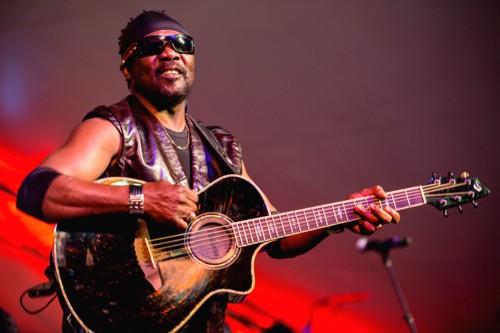
Toots Hibbert, the frontman of the legendary reggae trio Toots & The Maytals, has died at the age of seventy seven. One of Jamaica's most influential musicians, he helped popularise reggae in the 1960s with songs like 'Pressure Drop', 'Monkey Man' and 'Funky Kingston'. He even claimed to have coined the genre's name, on 1968's 'Do The Reggay'. The cause of death was not disclosed, but Toots had recently been taken to hospital with Covid-like symptoms and was placed in a medically induced coma. A charismatic and soulful performer, Hibbert scored over thirty number one singles in Jamaica. Thanks to his full-throated vocals, he was often referred to as 'The Otis Redding of Reggae.' The musician was born in May Pen, a town thirty miles West of Kingston, in December 1942. The youngest of seven children, he grew up singing gospel music in his church choir - but it was at school where he formed his ambition to become a performer. 'We had to sing before class, in the morning,' he told BBC 6Music in 2018. 'And teacher said, "Yeah, you have the best voice" and gave me good encouragement.' His mother, a midwife, died when Toots was eight, with his father dying three years later. As a teenager, he moved to Kingston, where he lived with his older brother John (who had nicknamed him 'Little Toots') and found work in a barbershop. There, he struck a friendship with singers Jerry Matthius and Raleigh Gordon, with whom he formed The Maytals. In 1962, the year Jamaica gained independence from the United Kingdom, they were discovered by Clement Coxsone Dodd, who signed them to his famed Studio One label. Over the next ten years, they released a string of hit singles including 'Fever', 'Bam Bam' and 'Sweet & Dandy'. But the group hit a roadblock in 1967, when Hibbert was arrested for possession of marijuana. He served nine months in The Slammer. On his release, they recorded '54-46 (That's My Number)' - a reference to his prison number. It became one of the first reggae songs to receive widespread popularity outside Jamaica, introducing many Europeans to the sound for the first time. At the time, however, the word reggae didn't even exist. The music, which was an evolution of ska and rocksteady, had been called 'blue-beat' or 'boogie-beat' until Hibbert intervened. 'The music was there and no-one knew what to call it,' he told 6Music. 'In Jamaica we had a slang - if we're not looking so good, if we're looking raggedy, we'd call it "streggae." That's where I took it from. I recorded this song ['Do The Reggay'] and people told me that the song let them know that our music is called Reggae. So I'm the one who coined the word!' The Maytals were part of a scene that included soon-to-be legends, such as The Wailers, Lee Scratch Perry and Jimmy Cliff and they recorded with everyone from The Skatalites to Prince Buster. 'It was competitive and friendly, a golden time,' Hibbert recently recalled in a profile for Rolling Stain. The group scored a UK hit with 'Monkey Man', and, in 1972, Hibbert appeared in the ground-breaking movie The Harder They Come. The Maytals' classic 'Pressure Drop' was featured on the soundtrack - which introduced many US fans to reggae - and it was later covered by The Clash, cementing the group's reputation in the UK. In 1980, they entered the Guinness Book Of Records after a concert in London's Hammersmith Palais was cut to vinyl and released in just twenty four hours, with Island Records boss Chris Blackwell personally delivering copies to record shops in his Mini Cooper. A year later, however, Matthias and Gordon retired from music and Hibbert continued as a solo act. He assembled a new version of The Maytals in the 1990s and toured extensively - but made a more high-profile comeback with the 2004 CD True Love. Boasting new recordings of some of his best-known songs, the record featured a host of guest stars - including Eric Clapton, Keith Richards, No Doubt, Willie Nelson, Bonnie Raitt and The Roots. It went on to win a Grammy award, rejuvenating the musician's career. He released a solo CD, Light Your Light, in 2007 and hit the road for The Maytals fiftieth anniversary in 2012. The following year, however, he was injured during a concert and was unable to perform again until 2016. 'What happened was we were doing a college show and one of the guys loved my music so much that he threw a liquor bottle onstage,' he later recalled. 'I tried to catch it but it hit my head. It was a pity that it happened. It's taken me three years to make people happy again.' The fan was arrested and Hibbert told the judge he had suffered 'extreme anxiety, memory loss, headaches, dizziness and, most sadly of all, a fear of crowds and performing.' However, he requested that the nineteen-year-old receive a light sentence. 'He is a young man and I have heard what happens to young men in jail,' he wrote in a letter to the judge. 'My own pain and suffering would be increased substantially knowing that this young man would face that prospect.' In the ensuing years, Hibbert recorded almost every day in his home studio and recently released what was to be his last CD, Got To Be Tough. It was co-produced by Zak Starkey who marvelled at the musician's longevity. 'The power in his voice is beyond anyone I've ever met,' he told Rolling Stain. 'And he has lived through all the generations of Jamaican music. He was at the forefront at the start, and he's at the forefront now. How incredible is that?' In 2012, Hibbert explained his theory of reggae in a profile for Interview magazine. He described his songs as 'a message of consolation; a message of salvation. The youth are going to the school and they have to listen to the words. The parents have to listen to the words. God has to listen to the words. So, we have to make it positive. If you sing nursery rhymes, it is nothing. You just blow up tomorrow, and the record dies at the same time. But if you give positive words, that song lives for ever.'
Ronald Bell, one of the founder members of Kool & the Gang, has died at the age of sixty eight. He started the band with his brother, Robert, in 1964. They became one of the 1970's most popular and influential soul and funk bands, with hits including 'Celebration', 'Ladies' Night' and 'Get Down On It'. Their music also featured in several films including Saturday Night Fever, for which they received a Grammy in 1978 and Pulp Fiction. Bell died at his home in the US Virgin Islands with his wife by his side, his publicist said. The cause of death was not given. A self-taught saxophonist and singer, he founded the group in New Jersey with Robert and five school friends - Dennis Thomas, Robert Mickens, Charles Smith, George Brown and Ricky West. Their career was split into two distinct halves. In the early 1970s, they scored US hits with the foot-stomping funk of songs like 'Jungle Boogie' and 'Hollywood Swinging'. Then, with the addition of vocalist JT Taylor in 1979, they morphed into a hit-making R&B band, scoring the biggest commercial success of their career as they reached their twentieth anniversary. As musical director, Bell co-wrote all of their biggest hits, including the wedding disco standard 'Celebration'. It was his favourite song from the band's extensive back catalogue, he told the Reuters news agency in 2008. 'I was clueless, thinking that that was going to be a hit. I had no idea,' he noted. 'But after all these years, there are times at the end of the show when I see all of these people singing a song and after all of an hour-and-a-half, you ask them to jump up and down and they still jump up and down. That's kind of overwhelming for me.' For what it's worth this blogger, a big fan of most of Kool & The Gang's music, is with Buffy Summers' opinion of 'Celebration' in the Buffy The Vampire Slayer episode Prom Night when it gets played at the Sunnydale High end-of-term party. 'I hate that song!' Anyway, the group received a star on the Hollywood Walk of Fame in 2015 for their contribution to the world of entertainment and were inducted into the Songwriters' Hall Of Fame in 2018. Bell was born and raised in Ohio and picked up the music bug from his father, a professional boxer who was a friend of jazz legends Thelonious Monk and Miles Davis. Unable to afford drums, Bell and his brother taught themselves to play on makeshift instruments. 'I used to beat paint cans like bongos and depending on how much paint was inside, this would determine the tone of the sounds we made,' he recalled. After the family moved to New Jersey in his teens, Bell's mother bought him a real set of bongos and he began to teach himself bass guitar, borrowing an instrument from the brother of his future bandmate Spike Mickens. The first incarnation of Kool & The Gang formed in 1964, but they cycled through several names - including Jazziacs, The New Dimensions, The Soul Town Band, The Jazz Birds and Kool & the Flames - before settling on their best-known moniker in 1969. Along the way, they combined their love of jazz with the gritty rhythms of street funk, creating a sound which would lead to their success in the 1970s. 'We used to play a lot of percussion in the streets in the 1960s, go to the park and start beating on drums,' Bell told Rolling Stain. 'You had a hard time trying to get us to play R&B,' he added. 'We were die-hard jazz musicians. We're not stooping to that.' As The Jazz Birds, they won the Apollo Theatre's famed Amateur Night and landed a record deal with a small independent label, De-Lite Records. Three singles from their self-titled debut LP hit the pop charts, with the instrumental track 'Kool & The Gang' showcasing their raucous, horn-driven sound. Their mainstream breakthrough came with 1973's Wild & Peaceful. Lead single 'Funky Stuff' became their first top forty hit in the US, followed by 'Jungle Boogie' and 'Hollywood Swinging', which both reached the top ten. The former went on to become one of their signature songs - memorably used in Quentin Tarantino's Pulp Fiction and sampled in Madonna's 'Erotica'. It was only written after the band's record label, in search of a hit single, pressured Kool & The Gang to record a cover of 'Soul Makossa' by Manu Dibango. 'It would have been a hit,' Bell later recalled. 'But we decided we were not going to record 'Soul Makossa' - we'll come up with our own "jungle music", not to be derogatory. We made the song up in the rehearsal, went in and recorded it that night. 'Jungle Boogie' is one take.' As disco rose to prominence, the band struggled to replicate their early success - although they did win a Grammy for 'Open Sesame', their contribution to the multi-million-selling Saturday Night Fever soundtrack. Things changed with the addition of Taylor, a former nightclub singer and producer Eumir Deodato, which led to a cleaner, pop-driven sound and the crossover single 'Ladies' Night'. The decision was prompted when the band found themselves on tour with The Jacksons and were told by the promoter that they needed a frontman. Taylor, chosen for his deep baritone 'like Nat King Cole', was the only singer they auditioned. Unlike many of the funk bands of the 1970s, Kool & The Gang thrived in the 1980s, scoring huge hits with sentimental ballads like 'Joanna' and 'Cherish', as well as the party anthems 'Steppin' Out' and 'Get Down On It'. Possibly their most enduring hit was 'Celebration', which was inspired by Bell's Islamic faith. 'I was reading the scripture about where God called the angels together and made an announcement that he was going to create this being,' he told Songwriter Universe. 'He gathered the angels together and they said, "We don't know nothin', but we just celebrate you, God - we celebrate and praise you." And I thought, I'm going to write a song about that, [with the line] "Everyone around the world ... Come on!" That's the intent. It was actually written for mankind.' The group found a new generation of fans in the 1980s and 90s as their music was sampled in a raft of pop and hip-hop songs. 'Jungle Boogie's horn riff appears in Luniz's 'I Got Five On It'; 'Summer Madness' formed the basis of 'Summertime' by DJ Jazzy Jeff & The Fresh Prince and the syncopated rhythms of 'Jungle Jazz' appear on dozens of songs, from M/A/R/RS's 'Pump Up The Volume' to Jade's 'Don't Walk Away'. When Public Enemy sampled three Kool & The Gang songs for Fear Of A Black Planet, Bell voiced his approval. 'After Public Enemy, I was all in [with hip-hop],' he told Rolling Stain in 2015. 'The music was all new to me. I sat and listened to Fear Of A Black Planet and was thrilled. I thought that was amazing. You can practically hear [drummer] George [Brown] playing that break-beat. You can hear our music in the background. You know it was compound and compact, but you can hear Kool & the Gang music in all that hip-hop.' The rise of hip-hop and the departure of Taylor in 1989 effectively ended Kool & The Gang's presence on the charts, but Bell continued to record and tour with the group as a legacy act. At the time of his death, he was working on a solo CD called Kool Baby Brotha Band, as well as a series of animations about the band's childhood and career. In an interview with Billboard last year, he said that he felt 'grateful' to have had a career in music. 'And, for it to be this long,' he added. 'For me, I'm most grateful for that, to still be relevant since [we were] nineteen.' The musician is survived by his wife, Tia Sinclair Bell and ten children as well as his brother, Robert and three other siblings.
Simeon Coxe, co-founder and vocalist of the 1960s experimental electronic band Silver Apples, has died aged eighty two. The musician was known for fusing traditional rock structures with electronically generated melodies, using synthesizers he built at home. Although Silver Apples' career was relatively short-lived, they influenced the likes of Hawkwind and, later, Beck, Beastie Boys and Portishead. Coxe died at home in Alabama, having suffered with the progressive lung condition pulmonary fibrosis. In a statement, his manager Jack Trevillion said that the condition had made it hard for the musician to breathe without oxygen, but that he had died peacefully. 'Silver Apples leaves a lasting legacy and contribution to electronic music with their ground-breaking sound that has stood the test of time and influenced many artists over the years, right up to the present day,' Trevillion added. Prior to forming Silver Apples, Coxe and percussionist Danny Taylor played in a more traditional 1960s rock group, The Overland Stage Electric Band. But the band's destiny changed after a friend introduced Coxe to an oscillator that had been built in the 1940s. Intrigued, Coxe started experimenting with the machine, layering eerie, atonal sounds over his band's music. 'They hated it,' he told some Middle Class hippy Communist of no consequence at the Gruniad Morning Star last year. All of the band except Taylor quit and the duo began making music as Silver Apples in New York in 1967. Coxe added more and more oscillators (or, in his own words, 'a home‑made pile of electric junk'), eventually building an instrument he called The Thing. According to sleeve notes on the band's debut LP, The Thing consisted of 'nine audio oscillators and eighty six manual controls. The lead and rhythm oscillators are played with the hands, elbows and knees and the bass oscillators are played with the feet.' The instrument - which the press dubbed 'The Simeon' - allowed for some unusual experiments. On stage, Coxe would ask the audience to shout out the name of their favourite radio station - and he would then tune into it live, adding random snatches of speech and music to the song 'Program'. The band won several famous fans, including John Lennon and Jimi Hendrix (with whom they jammed on a version of 'The Star-Spangled Banner' prior to the guitarist's legendary Woodstock appearance in 1969). But they remained a cult item, with low sales for their self-titled debut LP and its follow-up Contact. The artwork for the latter showed Coxe and Taylor sitting in the cockpit of a Pan Am jet - a stunt that had been arranged in return for the band including the airline's logo in the artwork. However, when the LP was released with a picture of a plane crash on the back cover, Pan Am sued. The record was pulled from the shelves and the band's instruments were confiscated. 'They actually came to a club where we were playing and confiscated Danny's drums,' Coxe told Sound On Sound. 'Fortunately, my stuff wasn't there. That photograph led to the lawsuit that broke the band up. No record label would touch us from that point on. That was the end of Silver Apples.' Coxe went on to work as a graphic designer, TV reporter and ice-cream salesman, while Taylor worked for a telephone company. Two decades later, a German record label printed bootleg copies of Silver Apples' two LPs, leading to a surge in interest in their music. In 1997, Coxe revived the band with a show at New York's Knitting Factory, attended by Johnny Depp, Kate Moss, The Beastie Boys and Sean Lennon. At the time, he hadn't been able to locate Taylor - but after mentioning his name in interviews, the pair reconnected and went on to release four new CDs including 1998's The Garden - completing the record they'd been working on when Pan Am ended their career. However, tragedy struck late the same year when their tour bus was forced off the road while driving home from a Hallow'een show in New York. Coxe suffered a broken neck, an injured spine and partial paralysis. Fans including Alan Vega and Martin Rev from Suicide and members of Sonic Youth, played a benefit concert to help pay his medical expenses. After 'years of physical therapy,' the musician felt well enough to resume his career, but by that time Taylor was in poor health, having been diagnosed with a degenerative muscle disease. When the drummer died in 2005 of a heart attack, Coxe kept his bandmate's spirit alive by sampling studio recordings into live performances, rather than replacing him with another musician. Coxe's injuries still caused complications, however. 'I still stumble a lot just walking around,' he told Electronic Sound magazine in 2012. 'If I pick something up that's hot, it'll burn me before I realise I shouldn't be picking it up. But when it came to playing, I discovered it didn't matter that I couldn't feel with my hands. As long as I could see the dials on the oscillators, I could play them.' His last CD, Clinging To A Dream, was released in 2016 and he said he never lost the desire to perform. 'Every day I wake up trying to figure out how to unravel something new,' he told Huck magazine. Coxe is survived by his long-term companion and creative collaborator Lydia Winn Levert, his brother David Coxe, sister-in-law Foster and his nephew, Aaron.
Pamela Hutchinson, a member of the Grammy-winning R&B group The Emotions, has died at the age of sixty one. She was the youngest sister of the band's core members Sheila, Wanda and Jeanette Hutchinson and sang on their biggest hit single 'The Best Of My Love'. News of her death was confirmed on The Emotions' Facebook page. 'In loving memory, we are saddened to announce the passing of our sister, Pamela Rose Hutchinson, on Friday18 September,' a statement read. 'Pam succumbed to health challenges that she'd been battling for several years. Now our beautiful sister will sing amongst the angels in heaven in perfect peace. Thank you and as always, You Got The Best of Our Love.' The band emerged from Chicago in the 1960s, where the sisters had been gospel singers as children. After achieving local success, they signed with Stax, working with the likes of Isaac Hayes and David Porter. When Stax folded, the group were taken under the wing of Maurice White from Earth, Wind & Fire, who produced two of their LPs and co-wrote 'The Best Of My Love'. The Emotions returned the favour by lending their harmonies to Earth, Wind & Fire's disco anthem 'Boogie Wonderland' in 1979. Pamela joined her sisters just in time for their crossover pop success - although she only appeared on one LP, before becoming a permanent member in the early 2000s. That incarnation of the band collaborated with Snoop Dogg on 'Life', from the 2006 CD Tha Blue Carpet Treatment. In their statement, The Emotions added: 'We appreciate all kind words, photos, and videos you may want to post for our beloved Pamela and of course your loving prayers. A life so beautifully lived deserves to be beautifully remembered.'
Anglo-French actor Michael Lonsdale, who played the villain opposite Roger Moore's James Bond in Moonraker, has died at the age of eighty nine. In the film, he played Hugo Drax, an industrialist planning to poison all humans on Earth then repopulate the planet from his space station. And he got all the best lines, particularly - to one of his minions - 'look after Mister Bond. See that some harm comes to him!' It was one of more than two hundred roles he played in both English and French cinema over a career that spanned six decades. Bond producers Michael G Wilson and Barbara Broccoli called Lonsdale 'an extraordinarily talented actor and a very dear friend.' The official Twitter account for the late Sir Roger Moore described his character as 'a smooth-tongued and cultured adversary to 007.' In an interview with Mi6 HQ in 2012, Lonsdale was asked whether he had been concerned that playing a Bond villain might have a negative impact on his career. 'On the contrary!' he replied. 'Because, I made so many films that were not really very popular or didn't make much money and I only made poor films, so I thought I might like to be in a rich film.' In the same interview, he said: 'My teacher, when I was at school for the theatre, told me that "One day you will have to play someone very nasty." But really, he is such a terrible character, a sort of Nazi. I mean, Drax is like Hitler. He wanted to destroy everybody and rain down a new order of very athletic, young people. He was mad, completely.' Lonsdale had a varied career on film, TV, radio and stage. Before becoming a Bond villain, he played the Deputy Commissioner Claude Lebel in 1973 political thriller The Day Of The Jackal. He later appeared as Jean-Pierre in 1998 US action movie Ronin, alongside Robert De Niro and Jean Reno and as Papa in Steven Spielberg's 2005 historical thriller Munich. He won a César for his role in Des Hommes Et Des Dieux (Of Gods & Men, 2010), as one of a group of Trappist monks living in rural Algeria. 'I'd vowed never to accept another role as a priest,' Lonsdale said. 'But, I couldn't resist playing this wonderful, generous character.' It was Orson Welles who first cast Lonsdale as a priest, in The Trial (1962). 'We only shot for one night, but he must have done twenty takes for my scene. Welles was incredibly nice and every few minutes, he would keep asking me: "Are you happy, Mister Lonsdale?" Of course, I was thrilled.' But Lonsdale's real breakthrough came in 1968 in two François Truffaut films. In La Mariée Etait En Noir (The Bride Wore Black), he was a pompous politician, one of five men on whom Jeanne Moreau wreaks revenge for killing her husband on the church steps after their wedding. In Baisers Volés (Stolen Kisses), Lonsdale was the obnoxious owner of a shoe shop who hires a detective (Jean-Pierre Léaud) to work in his store to find out why his employees hate him. Lonsdale's dry delivery and his ability to get to the core of a character almost immediately suited the stylised characterisations and deconstructed narratives of Marguerite Duras. He first appeared under her direction in Détruire Dit-Elle (Destroy, She Said, 1969) as an enigmatic German Jew, one of the few guests at a hotel in a forest. Later, Lonsdale was cast in Duras' India Song (1975) as the lugubrious French vice-consul in the India of the 1930s who turns a blind eye to the numerous affairs engaged in by his pampered wife (Delphine Seyrig). 'It's my favourite role,' Lonsdale said. He also performed in and directed plays by Duras on the Paris stage and, among many others, by Samuel Beckett, another favourite writer. In contrast, he gained wide international exposure in Fred Zinnemann's The Day Of The Jackal (1973), as the cool master policeman in charge of tracking down the lone would-be assassin (Edward Fox) and, of course, in Moonraker where his dry and laconic delivery of some fabulous lines won him an entirely new audience. Lonsdale was born in Paris, to an English father, Edward Lonsdale-Crouch, an army officer and a French-Irish mother, Simone Béraud and spent much of his childhood in London and the Channel Islands. When Michael was eight, his family relocated to Casablanca, where his father planned to set up a business. 'Then the war broke out and we were stuck in North Africa,' Lonsdale recalled. 'It was there that my love for the cinema was born, thanks to the American soldiers who arrived in 1942. My parents became friends with the officers and they brought me along to see all the great movies by John Ford, George Cukor, Howard Hawks. I even saw Casablanca in Casablanca. It was amusing to see Hollywood's idea of Morocco.' In 1947, Lonsdale went to Paris to study painting, but soon decided to switch to acting to 'overcome my shyness.' He took classes with Tania Balachova at the Vieux Colombier theatre, whose classes followed some of the Stanislavskian methods used by the Actors Studio in New York. Among his fellow students there were Seyrig, Laurent Terzieff, Stéphane Audran and Jean-Louis Trintignant. In his 2016 memoir Le Dictionnaire De Ma Vie, Lonsdale said he had fallen in love with Seyrig: 'It was her or nothing and that's why at eighty five I'm still unmarried.' Around that time, he changed his first name to Michel: 'Because the French had trouble pronouncing Michael' and converted to Catholicism. After a number of bits in commercial French films, he started to get bigger parts in the early 1960s, mainly thanks to Jean-Pierre Mocky, who cast him in five features as an archetypal bourgeois, bringing out Lonsdale's deadpan humour. The first, and most widely distributed abroad, was Snobs! (1962), an iconoclastic comedy in which Lonsdale played one of four unscrupulous directors of a milk co-operative vying to fill the post of president, after the incumbent is drowned in a vat of milk. During the 1970s, arguably the most fruitful decade of Lonsdale's career, he was fortunate to work for some of the best directors around in a range of small but striking roles: he was a possibly paedophile priest in Louis Malle's Le Souffle Au Coeur (Murmurs Of The Heart, 1971), a lustful theatre director in Jacques Rivette's Out 1 (1974), a world-weary doctor in Alain Resnais' Stavisky (1974) and, in Luis Buñuel's Le Fantôme De La Liberté (1974), a 'respectable' man who invites four monks to witness his being whipped. Lonsdale was also seen in what could be called avant-garde erotica, playing a judge investigating a girl's murder in Alain Robbe-Grillet's Glissements Progressifs Du Plaisir (Successive Slidings Of Pleasure, 1974) and as a man who tells his friends a story about his early days as a Peeping Tom in Jean Eustache's Une Sale Histoire (A Dirty Story, 1977). 'I like to be where no one expects me to be,' Lonsdale explained. He also made three films with Joseph Losey: Galileo (1975), based on the Brecht play, in which he played the intellectual Cardinal Barberini, who gradually discards his liberal views as he takes on the robes to become Pope Urban VIII, The Romantic Englishwoman (also 1975), in which he appeared as a smooth gangster and Mister Klein (1976), in which he was rather creepy as a cuckolded lawyer. Lonsdale continued to appear in diverse films, including a few Hollywood movies, such as John Frankenheimer's The Holcroft Covenant (1985), as the softly spoken Swiss accountant dealing with Michael Caine's tainted inheritance and Jean-Jacques Annaud's The Name Of The Rose (1986), where he was the quizzical abbot who believes The Devil is at work in his monastery. Although the quantity of films he made was not reduced, the quality was. Among the exceptions were The Tribulations Of Balthazar Kober (1988), the final film by the Polish director Wojciech Has, in which Lonsdale played a wise philosopher and two James Ivory films, The Remains Of The Day (1993), as a French statesman with blisters on his feet and Jefferson In Paris (1995), as Louis XVI. He was back to priestly robes as the Inquisitor General in Miloš Forman's period drama Goya's Ghosts (2006) and in Nicolas Klotz's Heartbeat Detector (2007) he was the chief executive of a large company who locks himself away in his office for hours on end and sits alone listening to Schubert in the back seat of his parked car. In the latter part of his career, the grey-bearded Lonsdale loaned gravitas to whatever part he played, including Theon, the head of the library in Alexandria, in Agora (2009), directed by Alejandro Amenábar, the leader of a mosque in occupied Paris in Ismaël Ferroukhi's Free Men (2011) and the title role of Manoel de Oliveira's O Gebo E A Sombra (2012).
Some cricketers made more runs, some had better averages but no Australian player of his time created more excitement or won more devotion than Dean Jones, who has died of a heart attack this week, aged just fifty nine. A transformative and captivating batsman, especially in the one-day format where he led the world in his pomp during the late 1980s and early 1990s, Deano earned iconic status for his sparkling footwork, effervescent strokeplay, bold running between wickets, and the strip of zinc cream always pasted on his bottom lip. A generation of Australian children, from his hometown of Melbourne to every corner of the continent, were compelled to watch him. They wanted to be him. Jones served as the gateway into a lifetime love of cricket played aggressively to the last. In the years after his career ended, his influence was clear on the Twenty20 revolution that followed, one he embraced as a coach, broadcaster and columnist. Born in the Melbourne suburb of Coburg, Jones followed in his father Barney's steps to the Carlton Cricket Club, where he was a teenage prodigy. He graduated to state ranks in 1982, one year later falling one run short of turning his maiden century for Victoria into a double. From the hard school of the Sheffield Shield, at the age of twenty two he was picked for his first Australian tour in 1984 - the toughest assignment in the game at the time, visiting the Caribbean. It was Jones's debut innings for his country in Trinidad that he looked back on with most pride - not a day when he raised his bat, but when he made forty eight against the fearsome West Indies pace attack on their own patch. It would be more than two years before he got his next chance at test cricket, but what followed was one of the most celebrated innings ever played. In the intense heat and humidity of Madras, he finished on two hundred and ten after more than five hundred minutes in the middle, so dehydrated that he struggled to control bodily functions, partially lost his memory of the innings and ended up in hospital on a drip. This would go on to become only the second tied test match. Underpinned by Jones's bravery, it heralded not only the beginning of his own era but the start of a new one for Australian cricket. A year later, in 1987, back in India and against all expectations, they held won the World Cup for the first time, with Jones at number three instrumental in their success. In 1989, when Allan Border's men reclaimed the Ashes in England for the first time since 1934, it was Jones who struck two centuries, earning acclaim as one of Wisden's five cricketers of the year. Twin centuries against Pakistan the following home summer, along with a torrent of runs in Australia's fluorescent one-day yellow strip, showed the man at his most prolific. The pin-up of a cricket-mad nation, Jones dominated the one-day game like no Australian before him. Skipping down the track at fast bowlers and spinners alike, he attacked, come what may. His one hundred and forty five at The Gabba against the touring English in 1990 was an innings before its time - an unbridled and ostentatious joy, blasting balls over the rope before it was routine to do so. By now there was no doubt: Deano was the best white-ball batsman on the planet. 'Sometimes I die by the sword,' he would later say of his approach, 'but, by gee, I had a few kills along the way.' He certainly did, reflected too in his whole-body boundary fielding or his sprints for each run, like an Olympian athlete rather than a cricketer. He was always in a pair of sunglasses, as significant to the Jones portrait as the lump of gum he chewed whenever at the crease with a County or Kookaburra blade, batting bare-headed or with a cap or in his broad-brimmed floppy hat. This all-or-nothing attitude was on show in early 1993 when Jones made the ill-considered decision to demand Curtly Ambrose remove the sweatbands from his wrists during a limited-overs final. Not for the first or last time, he pulled the wrong rein that night, inspiring a match-winning spell from his annoyed adversary. In part, it was an act of defiance at the end of a summer during which he had lost his test spot despite having clocked an unbeaten century two matches earlier. He would not add to his fifty two test caps, with selectors seeing fit to dispense with his eleven centuries and average of over forty six. Jones never truly got over this, nor did his disciples. In his return to the fifty-over team in the following home summer, it was a matter of faith that he had been slighted; the wrong would be righted. But when he fell two runs short of a hundred against South Africa in the heat of Brisbane - this time with an ice collar around his neck below the signature wide-brimmed hat - it signalled a last hurrah rather than an early-thirties rebirth. Within months he was jettisoned again, this time prompting an impetuous retirement from international cricket. Sure enough, there were twists. 'If they keep saying I'm one of the best one-day players in the world, then why am I not there?' Jones declared when piling on runs in his majestic summer of 1994-95 with Victoria, including an unbeaten triple-century on his beloved MCG. But, although he was available for selection before the 1996 World Cup, the call never came. Bruised by this, Jones made his point the best way he knew how. When Australia returned home as beaten finalists from that tournament, Melbourne's favourite son turned out for a World XI playing against his former teammates. He duly saluted, bringing up his century with a six into the Southern Stand. His supporters bellowed his name that day just as they defended his every frustrated public utterance. A decade in the canary yellow produced ovr six thousand runs at an average of forty five, including fifty three scores beyond fifty, as well as signs reading 'BRING BACK DEANO' for a decade more. Domestic cricket had to fill an initial gap, first in England, helping Durham to establish themselves as a first class county and then leading Derbyshire to their best finish in six decades in 1996, then for Victoria until 1998 to complete his career with twelve thousand six hundred and sixty eight runs across formats, at the time the record for that state. Another chapter of his life began beyond the boundary. While his thoughtful words in print were valued at home, it was in Asia that he was revered as a coach, ultimately leading to success at the helm of Islamabad United in the Pakistan Super League in 2016 and 2018. In 2017, when the trailblazing Afghanistan men's team was in need of a coach at short notice, it was Deano who stepped in to do the job. It was inevitable that Jones would court controversy as a broadcaster - he was remorseful to the end about a discriminatory remark he made in 2006 that insulted the South African Muslim batsman Hashim Amla. His years on the airwaves offered endless enterprising theories on the twenty-over game, which he coached so well and would have been so suited to playing. He died the night after commentating on an Indian Premier League fixture. Jones was appointed a member of the Order of Australia in 2006 for services not just to cricket but to cancer fundraising. A year ago he was inducted into the Australian Cricket Hall of Fame. But there remained a lingering resentment at feeling insufficiently respected by decision-makers at home, resulting in him revoking his life membership with Cricket Victoria after being overlooked for two T20 coaching jobs. Antipathy was part of Jones, but it never defined him. Instead, he will be remembered as a player first and foremost, for work on the field that lives on with those who saw it. It spoke volumes that he kept putting on the whites for his club well into his fortis in the city where he was adored, in a game that was blessed by his lifetime contribution. Jones is survived by his wife, Jane and their two daughters, Isabella and Phoebe.
On Saturday morning, dear blog reader, this blogger had a leisurely limp down to the local medical centre to get his annual influenza jab. And needless to say, he felt a small prick. As usual. Though, at least he remembered this time, at the very last moment, to get it in the arm that he doesn't sleep on.
And then, Keith Telly Topping went into town to pick up his - government allowed - essential supplies. Yes, if you're wondering, Fry's Turkish Delight is essential to this blogger's mental and physical well-being. Trust me, dear blog reader, you wouldn't like to see this blogger if he hasn't had his daily snort of Delight.  
Well, that's two hours and twenty eight quid this blogger will never get back. The buses were back to being 'look, we've got staff issues, all right?' (entirely understandably, let it be noted). This blogger' back was proper knackin' and town was full of people many of whom were not wearing masks and breathing, menacingly, in this blogger's direction. This blogger doubts whether he will be leaving the safety of the Stately Telly Topping Manor Plague House again until Doomsday comes. (Or, until he runs out of bread and milk, whichever occurs first ...)
It is something of an age-old truism, dear blog reader, but there always seems to be one moron who spoils everyone else's fun. As this image ably demonstrates. Although, to be fair, at least we now have proper confirmation of Darth Vader's first name. Funny, this blogger always assumed it was Jeff. They should've brought in Mister Stevens to sort it all out.
And finally, dear blog reader, further proof that nothing - but nothing - improves a blog's potential audience than a catastrophic worldwide pandemic and everyone being locked in their drum desperately seeking entertainment to take their mind of the fragile nature of mortality. If so, dear blog reader, sorry you came to the wrong gaff!