Welcome you are, dear blog reader, to the latest From The North bloggerisationisms update from the Stately Telly Topping Manor Plague House. Where, due to his long-standing - and much whinged-about - underlying health issues, this blogger remains (despite having had his first vaccination) currently still in 'shielding' mode. And, he will continue to be for another three weeks or so. There may be, as some people who - allegedly - know about such things have claimed, 'light at the end of the tunnel.' But, at the moment it still feels, as Half Man Half Biscuit once, wisely, noted like the light on an oncoming train.
 Indeed, at times it seems as though the tunnel with the light at the end of it in question is, in fact, the Book of Revelation's Bottomless Pit. But, hey, what can you do except surrender to the inevitable and contemplate upon the inherently ludicrous nature of humanity, dear blog reader? It's a living, isn't it?
 At least these last few weeks of full-on and proper lockdownerisation and virtually nil human contact - unless one counts the occasional arrivals of the postman and the regular deliveries of takeaways at the Stately Telly Topping Manor Plague House - has given this blogger the chance to catch up on more than a few movies and TV series. Ones which he's either had for a while but hadn't got around to watching yet or, several that he hadn't visited in a while. A pure-dead excellent 'Mike-Nesmith-Being-Happy-on-The-Monkees-title-sequence type situation' if ever there was one.
 Thus, dear blog reader, without any further faffing about, here's ...
 All Is True. The best thing that Ben Elton has written since around 1989. By a distance. Though, Brannagh's massive fake-konk is, admittedly, a talking-point all of its own.
 The Aeronauts. Purchased on download a few months ago almost entirely on the recommendation of From The North favourite Mark Kermode's 5Live review but not, actually, visited in full until last week. Why hadn't this blogger investigated this smashing little movie sooner, dear blog reader? It was this blogger's own fault, clearly, because he'd had the damn thing all along. A smashing Jack Thorne script and beautifully acted by Felicity Jones and Eddie Redmayne.
 Bridge Of Spies. Another one this blogger had owned for ages but had never found the excuse to actually sit down and watch properly. Why? God only knows; it is, after all Spielberg, Hanks, Rylance and Alan Alda amongst others, what's not to love? Minor trivia point: Rylance's character, Rudolf Abel, was a real-life type individual based on a man whose birth-name was William August Fisher and who was born in 1903 in the Benwell area in the West End of Newcastle. About but three miles away from the Stately Telly Topping Manor Plague House and, just a few streets away from where this blogger's own maternal grandfather, Andrew Lamb, was growing up at the same time in Elswick. Just thought this blogger would mention it.
 T2: Trainspotting. 'You ruined my fuckin' life, Mark. You ruined it! Now you're ruining my fuckin' death, too! Thanks a lot, amigo.' Ah, it's always good to catch up with old fiends.
 Heaven's Gate. A movie so good, so utterly perfect, that it sank the studio which made it! That takes some doing. Michael Cimino's masterpiece - despite many critics trying to convince you to the contrary.
 The Assassination Of Jesse James By The Coward Robert Ford. 'An epic film that's part literary treatise, part mournful ballad and completely a portrait of our world, as seen in a distant mirror,' as one critic described it. A movie of terrifying beauty which convinced me Brad Pitt actually was a proper actor.
 London Boulevard. A strangely affecting (if, occasionally affected) movie featuring a great performance by From The North favourite Keira Knightley and a great supporting cast of superb British character actors giving it The Works.
 How To Build A Girl. Another one that was bought almost entirely on the recommendation of From The North favourite yer man Kermode despite this blogger's long-standing love of the work of author Caitlin Moran and director Coky Giedroyc. A really lovely little movie in spite of Beanie Feldstein's somewhat 'approximate' Wolverhampton accent. And, any movie featuring Paddy Considine is worth a few moments of everyone's time. Except for Funny Cow, which should've been good given the cast it had but, oddly, wasn't.
 Little Joe. And, yet another one stumbled across almost by accident due to yer man Kermode giving it a big thumbs up and viewed for the first time over last weekend. An odd, disquieting, tensely sinister little piece with great acting, particularly Emily Beecham who is properly great in this.
 Låt Den Rätte Komma In. Reviewed for BBC local radio by this blogger back in 2009 (this blogger's first such gig). And, indeed, on this very blog (for a couple of years it was constantly referred to by many folks around the station as 'that scary Swedish film Keith Telly Topping liked so much'). 'It's more in the Near Dark or Leptirica school of bloodsucking despite its Byronesque central theme of doomed passion,' this blogger concluded more than a decade ago. Which has the bonus of still being true. 'Let's just hope the Americans don't screw this one up as badly as they did Ju-on: The Grudge.' Of course, the Americans did with the piss-poor and pointless Matt Reeves remake Let Me In. That's Americans for you, dear blog reader, always screwing things up and making a total mess of everything they get grubby their hands on.
 Scanners. Cronenberg's finest one hundred and nineteen minutes. Bar none.
 Theatre Of Blood. 'Only Lionheart would have the temerity to rewrite Shakespeare!'
 Pan's Labyrinth. 'A long time ago, in the Underground Realm, where there are no lies or pain, there lived a Princess who dreamed of The Human World ...' Watched for the first time in about five years last Friday. Still a wonderful experience. Though still weird-as-a-plate-of-jelly too, let it be noted. But, nevertheless, this blogger thought in 2007 and still thinks now it was/is great. 'I am Princess Moanna, And I am not afraid of you.'
 Six Minutes To Midnight. Because it's Eddie and Eddie is The Bollocks.
 The Sopranos. The perfect box-set to sit down with over three or four days if you're feeling stressed. Because nothing takes you away from the misery of shielding than massive violence on a grand scale.
 Game Of Thrones. The perfect box-set to sit down with over three or four days if you're feeling stressed, part the second. Because nothing takes you away from the misery of shielding than massive violence on a grand - almost Shakespearian - scale. And with dragons, obviously.
 The Likely Lads. As necessary, at the back end of a week like last week, as a warm mug of cocoa, a chocolate biscuit and a hug on a cold, miserable and depressingly awful day like what this blogger has experienced more than a few of lately. 'In the chocolate box of life,the top layer's already gone. And someone's pinched the Orange Crème from the bottom!'
 American Gods. The most recent episode, The Rapture Of Burning felt like a significant changing of gears on several plot fronts but was, ultimately, most notable for one reason. The best example of good, hard, old-fashioned, eye-watering, bigot-baiting sodomy seen on prime time telly since, ooh, the last time America Gods indulged in this sort of thing a couple of series back. Good for them.
 The BBC unveiled a new image of Doctor Who leads - and From The North favourites - Jodie Whittaker and Mandip Gill to mark International Women’s Day on 8 March. The photo was released to 'celebrate the creative and talented women on and off-screen who are inspiring the next generation of fans.' And, cos it was a really nice thing to do. Following the departure of That There Bradley Walsh and Tosin Cole in the acclaimed New Year's Day special Revolution Of The Daleks, The Doctor and Yaz will be joined by big-toothed Scouse-type individual John Bishop as new companion, Dan, when Doctor Who returns for its thirteenth series later this year. The series is now filming in Cardiff, but will span eight episodes - three less than usual - in a move which allows the show to stick to its usual production cycle despite complicated new health and safety guidelines, new 'normals', locerdownerisations and all that malarkey.
 The BBC's Irish-noir crime drama Bloodlands, which stars James Nesbitt, is to return for a second series. The first series concluded on Sunday night after launching last month with an average of 8.2 million viewers. The BBC said that the audience share of the premiere episode in Northern Ireland made it the broadcaster's biggest ever drama launch locally. Nesbitt said that he was 'thrilled' to be returning for a second series, so he was. 'I'm always happy to be back in Northern Ireland and to reveal even more about Tom Brannick,' said Nesbitt. It will again be filmed in Belfast and surrounding areas, including Strangford Lough in County Down. Chris Brandon, who wrote the drama, said he was 'absolutely delighted that Tom Brannick's story will continue.' Richard Williams, the chief executive of Northern Ireland Screen, added: 'It gives us a great sense of pride to see millions of viewers across the UK tune into a drama not just made, but set in Northern Ireland.'
 From The North favourite Doom Patrol has found its Madame Rouge in good old mad-as-toast Missy her very self, Michelle Gomez. The actress, who also appeared as Madame Satan in Netflix's Chilling Adventures Of Sabrina, will join Doom Patrol for its forthcoming third series. She will appear as the DC Universe's complicated and electrifying eccentric, who arrives at Doom Manor with a very specific mission ... if only she could remember what it is. Keith Telly Topping likes this news. Muchly.
 Principal photography has begun on the much-anticipated premiere series of the latest part of the Star Trek franchise, Strange New Worlds, according to Variety. This latest spin-off will follow the adventures of Captain Christopher Pike (Anson Mount), Mister Spock (Ethan Peck) and Number One (Rebecca Romijn) on board the USS Enterprise and is set, in essence, as a direct prequel to the original 1960s Star Trek series, the characters having been a major part of the - much loved - second series of Star Trek: Discovery.
 A major star - and From The North favourite - has joined the cast of Netflix's forthcoming Sandman series. During a recent interview, national treasure Stephen Fry appeared to suggest he has been cast as Fiddler's Green in the upcoming drama. The actor was interviewed during a break in the test cricket coverage on Channel Four. During the interview, he revealed that he is set to play 'an Edwardian writer figure called Gilbert.' As fans of Neil Gaiman's ground-breaking comic series will know, this is an alternate name of Fiddler's Green, a sentient part of The Dreaming. Created by Gaiman, Mike Dringenberg and Malcolm Jones, Fiddler's Green first appeared in 1989's Sandman issue ten. The character is actually an area of The Dreaming with its own consciousness that likes to take on human form and go wandering. Gilbert played a major role in the series most well-remembered plotline, The Doll's House (issues nine to sixteen and a particular favourite of this blogger) serving as an ally to Morpheus and Rose Walker. As previous announced, The Sandman was given an eleven episode order from Warner Bros and Netflix in 2019. Gaiman is set to executive produce with David S Goyer and writer/showrunner Allan Heinberg. Production on the series was delayed due to this bloody pandemic, though this gave the creative team time to refine the scripts. Thankfully, production on the highly anticipated series is now finally underway. The series will also feature Tom Sturridge as Morpheus, Charles Dance as Roderick Burgess, Gwendoline Christie as Lucifer Morningstar, Vivienne Acheampong as Lucienne The Librarian, Boyd Holbrook as The Corinthian, Asim Chaudhry as Abel and Sanjeev Bhaskar as Cain. There remains no word as yet on who will be playing Morpheus's sister, Death.
 The From The North headline of the week award goes to the Gruniad Morning Star and their reporting on the aftermath of what shall from now on be known as The Disgrace Of Clapham Common and the pressure currently being - rightly - heaped on the less-than-broad shoulders of Met Commissioner and walking catastrophic disaster area, Cressida Dick. Defiant Met Chief Refuses To Quit & Hits Out At 'Armchair' Critics. This, of course, being the self-same Cressida Dick who was, longer-term dear blog readers may remember, so keen to cast herself in the role of 'armchair TV critic' when expressing her considerable ire upon the acclaimed BBC police drama Line Of Duty. Which, of course, brought a particularly brilliant response from the drama's author, Jed Mercurio: 'My inspiration for writing Line Of Duty was The Met Police shooting an innocent man and their dishonesty in the aftermath. So thanks to Cressida Dick for reminding me of our [previous] connection.' Dick by name, dear blog reader. And Dick by nature.
 A close runner-up in the From The North headline of the week award goes to the Daily Lies from their tremendous Tik Tok Star Admits To Spanking Eighty-Year-Old 'Sugar Daddy' To Get Free Boob Job, an 'exclusive' story about 'busty blonde' Hannah Loran who 'shared secrets of her life as a self-confessed bimbo' to her Tik Tok account (it's a thing, apparently) where she 'boasts over one hundred thousand followers' encouraging them to 'scam sugar daddies.' One suspects that the main reason the Lies 'exclusive' is an exclusive is no other newspapers was desperate enough to publish such diarrhoea.
 'Legend' - like 'genius' - is a word thrown around all too often these days to describe the merely popular. But it is a completely appropriate description of the late Murray Walker. The Formula 1 broadcaster, who died on Saturday at the age of ninety seven, was genuinely loved by millions across the world for his high-energy motorsport commentary style, peppered with amusing mistakes and malapropisms ('there's nothing wrong with the car ... except it's on fire!' et al). The errors were what made him famous, but it was his natural warmth and effervescent enthusiasm for his sport that led the audience to find charming what in almost any other broadcaster might have been an annoying trait. In describing Walker's commentary style, the late smug git Clive James hit the nail on the head: 'In his quieter moments, he sounds like his trousers are on fire.' Murray was one of the very few public figures who was taken to heart to the extent that he was nearly always referred to by his first name, rather than his second. And it was always spoken with affection. Malapropisms and mis-speaking notwithstanding, Walker was a quite brilliant practitioner of his craft. He might, as he put it himself, have 'come over as a slightly over-the-top enthusiast - it is a very exciting sport after all.' But, in fact the impression that he was making things up as he went along could not have been further from the truth. He worked hard at his preparation and was a commentator of consummate skill - perfectly able to judge what was required in the moments of extreme emotion that peppered his time in F1. His mouth may well have tended to be a couple of steps ahead of his brain in times of extreme excitement, but when it really mattered he could be relied upon to come up with the perfect response to a situation unfolding in front of his eyes, whether by instinct or good judgement. So his high-pitched waterfall of words in Adelaide in 1986 - 'And look at that ... That's Mansell!' - exquisitely expressed the shock being simultaneously experienced by millions of TV viewers back in the UK as they watched the Williams driver's world title hopes explode along with his punctured tyre. But, so also was Walker able to expertly shift tone upon swiftly recognising the seriousness of the horrific crash which killed Ayrton Senna at Imola in 1994. Walker's working life wasn't restricted to only broadcasting; after leaving school he fought in World War II and had a successful career in advertising alongside his commentary with the BBC. He was a modest man, but at times his natural gift and instinct persuaded him, correctly, that he should bring himself into the equation. This he did, wonderfully, in Japan in 1996, when Damon Hill crossed the line finally to win his world championship after three drama-filled years of trying and Murray said: 'I've got to stop because I've got a lump in my throat.' Murray's secret was that he was genuinely in love with the sport - and those in it - and he never lost the child-like joy he felt at being able to commentate on it.


Born Graeme Murray Walker in October 1923, after leaving Highgate School he fought in World War II as a ary Captain and tank commander, a role which saw him take part in the brutal Battle of the Reichswald in 1945. He initially developed a love for motorsport through his father Graham, who was a world-class motorcycle racer in the Twenties and Thirties and whose successes included winning the Isle of Man TT. Murray briefly raced motorbikes himself before recognising that his talents lay elsewhere and, instead, followed his father into commentary too, initially alongside him at the TT. He commentated on his first Grand Prix for the BBC at Silverstone in 1949 and continued to work on all forms of motorsport for both the BBC and ITV over the next three decades while pursuing a full-time and highly successful career in advertising. His company invented the famous slogan, 'A Mars a day helps you work rest and play,' although Murray insisted that he has been wrongly credited with coming up with the line himself. He did however admit to creating with an equally famous jingle: 'Opal Fruits - made to make your mouth water' - among others. He did not become a full-time F1 commentator until 1978 - and even then, he initially dove-tailed it with his advertising career - but over the next twenty three years he was to make the role his own in a way perhaps no other commentator on any other sport has. Through the 1980s and into the early 1990s, Walker struck up a popular and extremely effective double-act with the former Grand Prix world champion the late James Hunt. They were very different characters and initially Walker disapproved of both Hunt's approach to broadcasting and his lifestyle. He once famously told viewers that Hunt had 'popped out of the commentary box to have a look at the back of the circuit,' when in fact James was outside smoking a joint, a practice of which Walker most definitely did not approve. And, Walker once told a journalist that he resolutely refused to let Hunt see his laboriously researched commentary notes because he did not see why 'the lazy bugger should benefit from all my hard work.' But whether through the difficult early days of their relationship or later, when they developed a huge mutual respect and became close friends, their partnership was always a brilliantly successful mix of Walker's wide-eyed enthusiasm and Hunt's languid and eloquent determination to say exactly what he thought. Walker's public persona was part of his charm. He came across as someone who refused to see any negatives about the sport he loved and who certainly would not voice them professionally. In private, he was equally charming and likeable - but unsurprisingly different. An intelligent and perceptive man and far more cerebral and considered than his public suggested, he was well aware of some of the darker sides of the sport. He also had a well developed and dry sense of humour. On one particularly dreary, damp and cold afternoon at Germany's Nurburgring, gazing out of the window at the blanket of grey covering the Eifel forests he told a colleague: 'I can remember driving across there in a tank!'
As well as F1, Murray also regularly commentated on other motorsport for the BBC, most notably his beloved motor biking; his most memorable moment coming at the 1979 Silverstone 500CC Grand Prix as his friend Barry Sheene took the lead from Kenny Roberts and casually turned around and flicked the V's at his American rival. Murray's 'And, look at that! Barry Sheene with absolute effrontery not only looks over his shoulder but takes his left clutch hand off the handlebar and waves to Kenny Roberts!' has, rightly, gone down in history as one of the great moments of commentary. In fact, as Murray memorably confessed during an interview on Jeremy Clarkson's short-lived BBC chat show in 2000, he's always rather fancied commentating on something more sedate, like snooker! Murray carried on commentating with the BBC until 1996, alongside Jonathan Palmer following Hunt's untimely death in 1993 and then, when the corporation lost the rights, on ITV alongside Martin Brundle, until finally calling it at a day in 2001, just short of his seventy eighth birthday. To the end, his commentaries were as strong as ever and the F1 world - even those from outside the UK who had rarely heard his work - was sorry to see him go, while accepting that it was better to do it before the quality tailed off. On his retirement, Walker and his doting and doted-upon wife, Elizabeth - whom he had married in 1959 - moved from North London to a thirteen-acre patch of the New Forest, deer, ponies and tinkling trout stream included. Among the mementoes and trophies that littered his office den and alongside fondly displayed pictures of his late father in his champion's leathers, was a striking, specially commissioned oil painting of a vintage thirties car at top lick, his hero Tazio Nuvolari in action. 'Tazio Nuvolari was the very best of all,' he once said. 'I was fourteen when dad took me to see him at Donington in 1938. He drove an Auto Union. It changed my life, I think, to watch as he smilingly slalomed into and out of every corner, all arms and elbows and hair-raising four-wheel drifts, all opposite-lock and showers of shale and cinders. Tazio was the man a whole generation queued up all night to watch, unquestionably the greatest driver of them all for me.' After he ended his regular Formula One commentaries, Walker continued to appear on television for a number of years afterwards, mainly on magazine programmes but occasionally commentating on less high-profile motorsport events. Acknowledging the partial deafness he had developed over the years, in 2006 he became an ambassador for the David Ormerod Hearing Centres and campaigned to help people understand the importance of frequent hearing tests. Murray was a hugely popular character within F1 and even after his retirement was greeted with respect and reverence by current stars such as Lewis Hamilton, Jenson Button and Fernando Alonso, whose careers in some cases he had not even covered. His inherent modesty, though, meant that he was always surprised and genuinely touched by any recognition afforded him - never more so than at the 1996 British Grand Prix, when he was persuaded to go on the pre-race drivers' parade around the track and was celebrated with more cheers from the crowd than any of the drivers, to whom Walker looked up to with admiration. Even into his eighties, he was making occasional appearances in BBC F1 programmes, in Monaco or at Silverstone and in a brief spell in the commentary box at the 2011 British Grand Prix, he proved that the ability to find a choice phrase had not deserted him. Sports commentary has moved on to the point where the mistakes which made Murray famous would probably not be tolerated any longer. Equally, it's hard to imagine any commentator who, while making them, could fill his audience with such joy and pass on so effectively his own consuming passion for what he was talking about.
 It is hard to over-estimate the impact of Marvellous Marvin Hagler in boxing history. When Halger became world middleweight champion in September 1980, the career of Muhammad Ali was fizzling out and concerns were widespread as to who would replace The Greatest as boxing's flag bearer in terms of global appeal. Enter the Four Kings. Hagler was joined by Sugar Ray Leonard, Tommy Hearns and Roberto Duran in creating a decade of memories, with no need to listen to ballads about the best never fighting the best. The first of the quartet to die, Hagler was revered as a blue-collar champion, a working class hero and the fighters' fighter. From the greats to the ordinary, the reaction online to his death has amounted to a tidal wave of shock and respect. He was unconventional as a right-handed southpaw. Generally, but not always, fighters lead with their weaker hand, allowing for an increase in power driven through the body from the feet up into the (usually stronger) back-hand. He would switch freely from southpaw to orthodox, seemingly carrying equal power in each hand; he was effective in attacking to the body as well as the head, blessed with sweet timing and a rock-hard chin. At times, even against the very best, he seemed to own more of the ring than his opponent. Alan Minter, the man Hagler dethroned to take the undisputed middleweight crown on a volatile night at Wembley Arena four decades ago, once said that he had watched Hagler hitting a punchbag in training and noticed how the American turned his fist at the point of contact, generating a sound close to a screech which stood out from the clanging of the chains. On the night, Minter succumbed in three rounds, his face bloodied as though Hagler's gloves were adorned with razor blades. Another Briton, Leicester's Tony Sibson, suffered a similar defeat in Hagler's sixth title defence three years later. Sibson lasted six rounds but caught Hagler on a night when the champion chose to display the bulk of his repertoire, the accuracy and delivery of the punches all part of a masterclass. Of Hagler's thirteen world title defences, only two went the distance. His three-round explosion against Tommy The Hit Man Hearns in April 1985 takes some shifting as the choice of a fight to take on DVD to a desert island. The first round might never be equalled for sheer ferocity. The points reverse against Sugar Ray Leonard at the same Caesars Palace Arena in Vegas two years later ranks as one of the most hotly-contested decisions of all time. Hagler finished two rounds up on one card, Leonard the winner by two rounds and eight rounds on the others. Those who disagreed would fill many a stadium. In Leonard's camp, the great trainer Angelo Dundee had noticed 'a Hagler flaw' and revealed the thinking in his autobiography I Only Talk Winning: '[Hagler] needed two steps to get off with his punches.' Leonard read so much of what Hagler intended to throw. Some argue that Leonard created an illusion of control based on dancing, others that Hagler did not deserve reward for often connecting only with thin air. The nights weren't always so glossy for Hagler. He engaged in scraps at The Spectrum in Philadelphia which became known as 'The Philly Wars', losing on points to Bobby Boogaloo Watts and Willie The Worm Monroe in 1976. He would avenge the setbacks before lifting the world title and the value of those experiences proved to be important blocks in the building of the colossus. In his inestimable chronicle Four Kings, boxing writer George Kimball recounted the story of why Hagler chose to turn professional after winning the national amateur championship in Boston, rather than wait for a tilt at Olympics glory in Montreal three years later. 'You can't take a trophy and turn it into a bag of groceries,' was Hagler's philosophy. Kimball noted how Hagler earned forty dollars for his professional debut. The everyman story endeared him to many.

Hagler was born in the poorest area of Newark, New Jersey, where he lived with his brother, Robbie, who also became a professional boxer and four sisters. His father, Robert Sims, had walked out on the family, leaving his mother, Ida Mae Hagler, to raise the children. Caught up in the terrifying race riots that left twenty six dead in Newark in 1967 and their tenement home all but destroyed, the Haglers relocated to Brockton, Massachusetts, where Marvin soon developed a love for boxing. He told how he had walked into a gym run by Pat and Goody Petronelli in 1969, after being roughed up on the street by a local tough. His mission was to learn to fight and soon his aptitude was clear as he won the amateur national title in 1973. Learning the hard way, taking fights against tough opponents for small financial reward, Hagler became something of an avoided man. As a southpaw he had an awkward style as well as a freakish ability to take punches without them having any discernible effect. Hagler started winning after those early setbacks, two victories over the highly-rated Kevin Finnegan and another over the big punching Philadelphia favourite Bad Bennie Briscoe, earned him a contract with Bob Arum, the top Vegas-based promoter. His first challenge for a world title was in 1979 against the New York-based Italian Vito Antuofermo, which he believed he won but was given a divided decision draw. His next chance came the following year against Minter. A hostile atmosphere had been stoked by Minter, by then the champion, saying that he would never lose his title to a black man. He was wrong. Minter was given a savage beating. The referee Carlos Berrocal halted the contest in the third round with Minter horribly cut around both eyes. Fleeing the ring, Hagler had to be shielded by his corner team from a hail of bottles and glasses on one of British boxing's most shameful nights. He went on to successfully defend the title twelve times through one of the great eras for boxing and, more especially, the middleweight division. Among the defences were epic wins against the Panamanian Roberto Durán, the feared Ugandan puncher John Mugabi and Sibson. But his run of success came to an end in 1987, against Leonard. Hagler never accepted that he had lost the fight and he never returned to the ring. His first marriage, to Bertha, with whom he had five children - Charelle, Celeste, James, Marvin Junior and Gentry - ended in 1990. He married again in 2000, to Kay Guarrera and they kept homes in Milan, where he had some success working in Italian films and in New Hampshire. Hagler had become irritated that ring announcers were not introducing him to the crowd using his nickname, so he officially changed his name in 1982. Although the Marvellous one was asked to return to the ring, amid much speculation that there would be a money-spinning rematch with Leonard, his retirement proved to be permanent. Not given to colourful pre-fight hyperbole, he preferred to speak though his performances. Perhaps, to quote another of his famous observations about earning millions of dollars after being born into abject poverty, life had become 'too comfortable. It's difficult to get up to do roadwork at five in the morning when you are sleeping in silk pyjamas.'
 The horror filmmaker Norman J Warren has been remembered as a 'ground-breaking director' and a 'gentle, kind, sweet chap' after his recent death at the age of seventy eight. The director was best known for 1970s horror movies such as Satan's Slave, Prey and Terror, as well as the 1980s works Inseminoid and Bloody New Year. Along with the films of Pete Walker, Warren's movies are sometimes dubbed 'the New Wave of British horror', on the basis that they upped the ante in terms of sexual explicitness and gore from that of the Hammer, Amicus and Tigon productions which dominated the genre in UK cinema up to the early 1970s. Warren's manager Thomas Bowington told the Press Association that Norman died in the early hours of Thursday morning from natural causes, after a year of ill-health. Bowington said: 'He was a ground-breaking director in the seventies and eighties, after so many films had been in a period setting, he put horror in a more modern setting. He was the biggest film lover I ever met, he loved films and was so helpful to young filmmakers. He was always happy, always laughing, always kind. Considering some of his films were quite savage, a gentler, kinder, sweet chap you couldn't find. He was like everyone's best friend.' Warren stopped making feature films in the 1980s and turned his attention to documentaries and educational films, including some for the BBC. Bowington said that Warren was popular with children because of his 'lovely, easy-going nature.' He also made short films, including the silent Fragment, with his frequent collaborator, the composer John Scott and worked frequently with the screenwriter David McGillivray, who said: 'Norman Warren was my best friend in the entertainment business. We met in 1967 when he was making his first feature My Private Hell. He was the youngest director of "sexploitation" films in the sixties and went on to try other genres. Subsequently his early films have become cult successes. He liked nothing more than to attend festivals and conventions and talk to fans and young filmmakers.' An avid film fan from childhood, Warren entered the industry as a runner on Anthony Asquith's The Millionairess (1960) and as an assistant director (on, for example, 1962's The Dock Brief) before directing Fragment in 1965. Calcutta-born Bachoo Sen, the owner of the Astral Cinema in Brewer Street saw Fragment and subsequently hired Warren to direct two feature-length sex movies, Her Private Hell (1968) and Loving Feeling (1969). Both were financial successes, but Warren saw little of the profits. Not wanting to be typecast as a director purely of sex films, Warren turned down a third offer from Sen (for 1970's Love Is A Splendid Illusion) and had to wait several years to raise the money required to make Satan's Slave (1976), the first of a series of impressively visceral horror films that he directed. Warren's final two movies, Bloody New Year and Gunpowder (both 1987), were hampered by low budgets imposed by their producer, Maxine Julius. Although Warren did not release a feature between 1987 and 2016, he continued to work, directing music videos and educational shorts such as Person To Person, a BBC production designed for students of English. His horror films developed a cult following, culminating in the making of Evil Heritage, a 1999 documentary about his work and the release of a highly-regarded DVD box-set in 2004. In 2007, Warren worked on the supplementary features for the DVD releases of Corridors Of Blood (1958), The Haunted Strangler (1958) and First Man Into Space (1959). He was a regular guest at Manchester's Festival of Fantastic Films. In 2016, Warren announced that he was in post-production on a new feature film, a thriller set in London's Chinatown. The completion of Susu was confirmed at Birmingham FearFest in May 2017, at which Warren was a guest of honour. 'Filmmaking for me is like a powerful drug, for no matter how difficult a production is, when it's over I can't wait to start the process all over again,' Norman once noted. 'The horror genre allows you to explore situations and emotions which would not be possible with a drama set in the world of reality.'
 Yaphet Kotto, best known for playing the villainous villain Doctor Kananga (and his alter-ego Mister Big) in the 1973 James Bond movie and From The North favourite Live & Let Die, has died at the age of eighty one. The deliverer of one of this blogger's favourite ever pieces of movie dialogue ('Names is for tombstones, baby. Y'all take this honky out an' waste him!') the actor also played a crew member in Ridley Scott's 1979 SF classic Alien. Kotto's other film credits included the action thriller The Running Man, alongside Arnold Schwarzenegger. He received an EMMY nomination for playing former Ugandan President Idi Amin in the 1977 TV movie Raid On Entebbe. His TV career included roles in The A-Team and Law & Order and one of Kotto's best-known roles, as Lieutenant Al Giardello in seven series of Homicide: Life On The Street on which he also worked as a scriptwriter. He died on Monday in the Philippines, his wife Sinahon Thessa said on Facebook. 'You played a villain on some of your movies but, for me, you're a real hero and to a lot of people also,' she wrote. 'A good man, a good father, a good husband and a decent human being, very rare to find. One of the best actors in Hollywood, a Legend.'


Kotto was born in New York to a Cameroonian immigrant father and a US Army nurse and began to study acting at the age of sixteen. Kotto said that he was inspired to go into acting by watching Marlon Brando in On The Waterfront and, later, by Sidney Poitier in The Defiant Ones: 'Standing right there on the screen was this tall black man and I said to myself, "I could be like him."' At nineteen, he made his professional theatre debut in Othello and, later, performed on Broadway in The Great White Hope taking over the lead role of the boxer Jack Jefferson from James Earl Jones. His first film projects included Nothing But A Man in 1964 and a small role as one of the bank robbers in The Thomas Crown Affair (1968). Having proved his ability, Kotto was then handed his first lead role in the home invasion satire-thriller Bone by Larry Cohen. Kotto played a robber who was mistaken for a handyman by a married couple and who was then enlisted by the wife to kill her husband. Kotto drew plaudits for his role as the first black Bond villain, Kananga - an evil Caribbean diplomat masquerading as a New York drug lord - in Live & Let Die, starring Roger Moore and featuring one of the best scripts of the series, by the late Tom Mankiewicz. Kotto then had parts in 1974's Truck Turner opposite Isaac Hayes and 1978's Blue Collar. In Alien, he took the role of the space ship's engineer Dennis Parker. Following that film's success, Kotto reportedly turned down the role of Lando Calrissian in the Star Wars sequel The Empire Strikes Back because he was wary of becoming typecast. 'I wanted to get back down on Earth,' he said in an interview. 'I was afraid that if I did another space film after having done Alien, then I'd be typed. Once you get one of those big blockbuster hits, you better have some other big blockbuster hits to go with it too and be Harrison Ford, because if you don't you place yourself right out of the business.' He also claimed that he turned down the role of Jean-Luc Picard in Star Trek: The Next Generation. 'I should have done that, but I walked away,' he admitted in 2015. 'When you're making movies, you'd tend to say "no" to TV. It's like when you're in college and someone asks you to the high school dance. You say no.' Kotto went on to play a supporting role as Richard Dickie Coombes in Brubaker in 1980. His other film credits included William Wyler's The Liberation of LB Jones (1970), Bill Cosby's Man & Boy (1971), Across One Hundred & Tenth Street (1972; reportedly the role which won him the Bond gig), Report To The Commissioner (1975), The Star Chamber (1983), Warning Sign (1985), Eye Of The Tiger (1986) and Freddy's Dead: The Final Nightmare (1991). Kotto's TV roles included appearances in For Love & Honor [sic], Murder She Wrote and Death Valley Days. Most recently, he reprised his role as Giardello in Homicide: The Movie in 2000 and voiced his Alien character in the Alien: Isolation video game. In 1999, he published his autobiography The Royalty: A Spiritual Awakening, in which he claimed that his father, Avraham, was descended from a Cameroonian royal clan and, also, from Edward VII. Kotto is survived by six children and had been married three times, to Rita Dittman, Toni Pettyjohn and Sinahon, who he married in 1998.
 Henry Darrow, the prolific TV actor from the 1950s through the early 2000s who found his breakthrough success as the larconic Manolito Montoya, son of a wealthy Mexican ranch owner on NBC's Western The High Chaparral, on died Sunday at his home in Wilmington. He was eighty seven. His death was announced on Facebook by his former publicist Michael Druxman. In addition to The High Chaparral, Darrow is best remembered by daytime viewers for his EMMY-winning role in NBC's sopa Santa Barbara. Already a familiar presence on television by the mid-1960s through appearances on series including Wagon Train, Stoney Burke, Voyage To The Bottom Of The Sea and The Wild Wild West, Darrow scored his signature role on The High Chaparral opposite Leif Erickson, who played a wealthy Arizona ranch owner Big John Cannon in the 1870s married to the Mexican daughter of a rival rancher. Darrow played the bride's brother who joins his sister (the late Linda Cristal) on The High Chaparral ranch. The regular cast of the popular series also included Cameron Mitchell as Cannon's brother, Buck and Mark Slade as Blue. Making its debut on American television in September 1967, it lasted four series (ninety eight episodes) and was screened around the world - it was particularly popular in the UK where it was a BBC2 staple for several years.

Born Enrique Tomás Delgado Jr in New York, Darrow returned with his family to Puerto Rico in his teens, later moving to California to study acting at The Pasadena Playhouse. Despite his numerous appearances on television in the early 1960s, Darrow's role on The High Chaparral was prompted by the actor's stage role in Ray Bradbury's The Wonderful Ice Cream Suit, co-starring F Murray Abraham. Bonanza producer David Dortort watched a performance of the play and cast Darrow in his new project, The High Chaparral on the strength of this. After Chaparral, Darrow went on to roles in The New Dick Van Dyke Show and Harry O, on which he played detective Manny Quinlan in the first series. He appeared regularly on episodic TV throughout the next several decades, including primetime appearances on the likes of Mission: Impossible, Hawaii Five-O, The Mod Squad, Kung Fu, Kojak, The Invisible Man, McMillan & Wife, The Streets Of San Francisco, The Six Million Dollar Man, Wonder Woman, Centennial, The Waltons, The Incredible Hulk, Quincy, Benson, Hart To Hart, TJ Hooker, Dallas, The Golden Girls, Star Trek: The Next Generation, Star Trek: Voyager and One Tree Hill, among many others. Darrow began a long association with the character Zorro in 1981, voicing the title role in the CBS animated series The New Adventures Of Zorro. Darrow published his memoir, Henry Darrow: Lightning In The Bottle, in 2012, the same year he received a Lifetime Achievement recognition at the American Latino Media Arts Awards. Making his big-screen debut in the 1959 comedy Holiday For Lovers, Darrow appeared in films such as The Hitcher, Summer & Smoke, The Glass Cage, St Helens, Runaway Jury, Walk Proud and Soda Springs. Darrow co-founded the Screen Actors Guild Ethnic Minority Committee in 1972 alongside Ricardo Montalbán, Edith Diaz and Carmen Zapata and was a founder of Nosostros. Darrow married his first wife, Louise DePuy, in 1956 when they were both working at The Pasadena Playhouse. They had two children, Denise and Tom who survive him along with is second wife, Lauren whom he married in 1992.
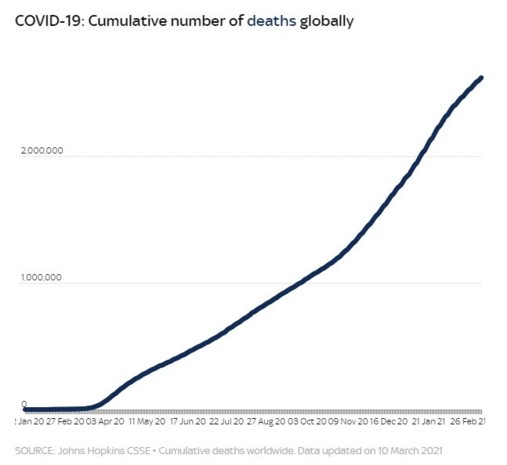
 Cabinet ministers and senior officials have snitched to the BBC that the government should have brought in tougher restrictions in the early autumn to tackle the "inevitable" second wave of coronavirus. As, indeed, anyone with half a brain in their skull could have told them at the time and, indeed, many did. In the run up to the anniversary of the lockdown, BBC News has spoken, off the record, to more than twenty senior politicians, officials and former officials about the key moments of the last twelve months. The investigation reportedly revealed 'significant frustration' in government about Boris Johnson's unwillingness to tighten restrictions in September, as pandemic cases again began to rise. One senior minister grassed that the government 'should have locked down more severely in the autumn,' while another alleged that it had been 'totally ridiculous' to be arguing about whether people should return to the office when there was inevitably going to be a second wave. And, one allegedly 'senior figure' alleged snitched like a filthy stinkin' Copper's Nark: 'The biggest mistake was the rush of blood of to the head in the summer ... There was a sense of denial about the second wave.' A - tragically nameless - former official added: 'We kept repeating the same mistakes over and over again, despite the masses of evidence that kept coming up. We lost an awful lot of time and that led to more cases and more deaths.' No shit? What a pity these individuals didn't have enough courage to actually come out and say all this publicly and without promises of anonymity. Cowards. The Health Secretary, odious oily twonk Matt Hancock defended the decisions taken - and, to paraphrase Mandy Rice Davies, 'well, he would, wouldn't he?' - claiming that the government had 'listened to all the evidence all the way through.' One or two people even believed him. But, he added: 'You have to balance all the different considerations. It's only at the prime minister's desk that all these different considerations come together. I'm responsible for the health aspects and then the huge economic response the chancellor is responsible for.' The BBC also revealed that Boris Johnson had been briefed by officials ahead of a press conference on 3 March 2020 - right at the beginning of the pandemic - to discourage people from shaking hands with each other. Instead, when he took to the lectern, the PM boasted he 'shook hands with everybody' during recent a hospital visit. A spokesman for Downing Street claimed: 'The Prime Minister was very clear at the time he was taking a number of precautionary steps, including frequently washing his hands. Once the social distancing advice changed, the Prime Minister's approach changed.' Johnson reportedly 'realised the gravity of the situation' at a meeting of Downing Street staff on 14 March 2020. Data experts told the Prime Minister that the government's forecasts of how the disease was spreading were wrong and that without an acceleration of the plans to control the pandemic, the NHS would be overwhelmed. He was also warned that restrictions could be needed for as long as eighteen months.
 In some really sad news, the chocolate maker Thorntons has said that none of its stores will reopen after coronavirus lockdowns are lifted. The decision to close its sixty one shops - including a couple regularly frequented by this blogger - will put more than six hundred jobs at risk. The company said it had been badly hit by the pandemic, which forced its stores to shut their doors during the crucial Christmas and Easter holidays. 'The obstacles we have faced and will continue to face on the High Street are too severe,' said Thorntons retail director Adam Goddard. 'Despite our best efforts we have taken the difficult decision to permanently close our retail store estate.' Thorntons said that it had spent forty five million knicker transforming the business with changes to the way stores operate and the introduction of new cafes but its plans had been thrown off course by the pandemic. The company, which was founded in Sheffield in 1911, said it would continue to sell its chocolate online and try to sell more through supermarkets. Since the beginning of the crisis, sales through its website have increased by more than seventy per cent compared to the previous year, it said. It will also try to expand the range of products made at its factory in Alfreton, Derbyshire and increase international sales.
 Key city centre streets could be pedestrianised and a major shopping mall overhauled as part of a fifty million smackers plan to 'remodel' Newcastle. Grey Street and Blackett Street would see traffic banned as part of the city council's proposals. The authority will also conduct an 'urgent' review of Eldon Square shopping centre to tackle an increase in the number of empty properties therein (and, given that Thornton's aren't reopening, there are now going to be two more empty gaffs therein). It said the city must 'adapt' to a rise in online shopping and climate worries. Paving and seating would see Grey Street become a 'hub for cultural events' (which it is anyway since it's got the Theatre Royal on it) and the 'primary pedestrian route between the city centre and Quayside' the council said. Plans to remove vehicles from Blackett Street have previously been opposed by transport firms as it is used by a number of bus services. Including all of the ones used by this blogger. Under the plans empty shops in Eldon Square would be available for 'cultural activities and exhibitions.' Council leader Nick Forbes said that city centres were 'changing' and 'must adapt.' He described the proposals as becoming 'even more important' as the city looked to rebound from the coronavirus pandemic. 'Getting the right mix of housing, culture and experiences for our residents will be what sets Newcastle apart,' he said. Meanwhile Old Eldon Square could see its layout changed with the aim of becoming a location for 'major civic and cultural events.' Ridley Place and Saville Row, both off Northumberland Street, are envisaged as areas for independent businesses and 'pop-up' food stalls. The council said that twenty million notes was 'in place' to begin the first phase of the work in summer, with the remaining thirty million knicker to be raised through grants and private funding. Residents and businesses will be be asked for their views on the proposals.
 A haul of really nasty weaponry - including swords and crossbows - has been seized by The Fuzz. Officers found the stash at a home in Gatesheed whilst investigating who had ordered a package of cannabis from the USA which was intercepted by Border Force. Northumbria Police said the weapons would be 'deadly in the hands of the wrong person.' Or, indeed, the right person, for that matter. A fifty one-year-old man has been arrested on suspicion of importing Class B drugs and released pending inquiries. The weapons haul also included some serious shit - air rifles, stun guns, knives and samurai swords. Mind you, dear blog reader, this is Gatesheed we're talking about.
 And finally, would you like to see a stunning picture of the Northern Lights and the Milky Way over Lindisfarne, dear blog reader? Of course you would, you're only human after all.